How to Buy a Car at Auction With Bad Credit
Quick answer: Yes — at a public auction there is no financing, so there is no credit check; cash is the gate, not your score. You pay the winning bid plus a buyer fee and other charges, in full and fast — often within 24 to 48 hours, and only a few days even at the big online houses. Bids are binding and cars are sold as-is, so inspect before you bid and set your maximum from the true total, not the bid.
Recommended · Temu
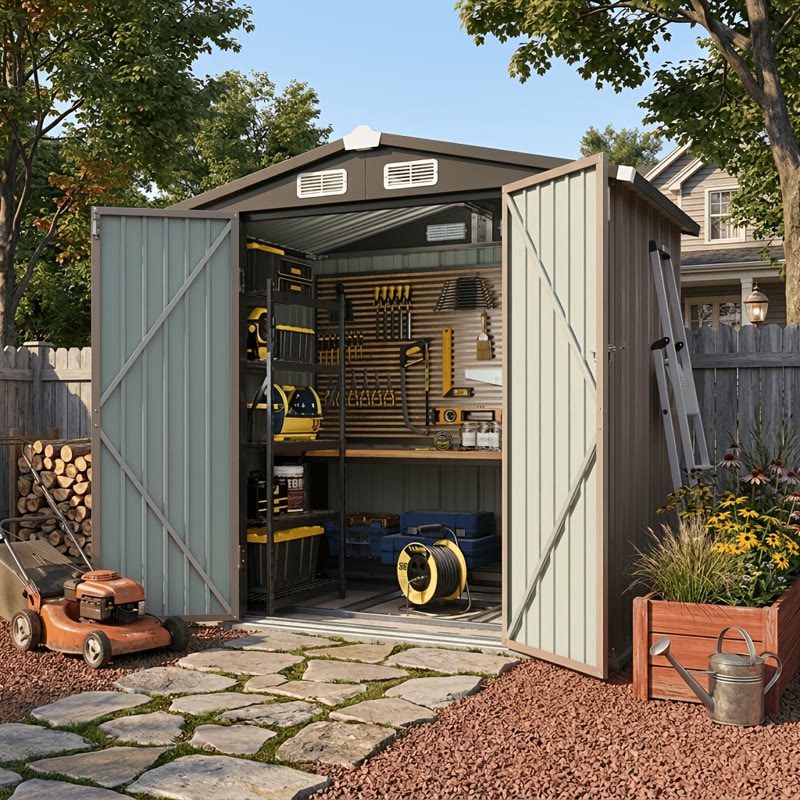
6x4 Ft Brown Outdoor Storage Shed with Lockable Double Doors
Just bought the car? Clear the garage so it actually fits. This weatherproof steel shed has lockable double doors — and no monthly storage-unit bill.
$137.21 on Temu
See the shed on TemuAffiliate link: if you buy, this site may earn a commission at no extra cost to you. Price checked September 2026; Temu prices change often.
Here is the blunt truth: your credit score only matters because you are asking to borrow money. Stop asking, and the score stops mattering.
That is what a public car auction is. There is no loan application in that room. No finance manager runs your file. The only question is whether the cash in your account can cover your bid — plus the fees stacked on top of it, which is where auction buyers get burned.
Plenty of buyers shut out of every dealership have bought a running car this way. It works. But the room has its own traps: fees that add hundreds to a cheap car, a payment deadline measured in hours, and a sale that is final the second you win. Go in knowing those three things and the auction is a real door. Go in guessing and it is a faster way to lose your down payment money.
Which auctions can the public actually get into?
Not every auction with cars in it is open to you. That is the first trap.
Dealer-only auctions. Manheim and ADESA — the big wholesale auctions where dealers stock their lots — are closed to the public. You need a state dealer license, verified through AuctionACCESS, just to register and bid. Some Manheim locations run separate public sales on a limited pool of cars, but the main lanes are not yours.
Public auctions. These are open to any adult with a government photo ID who registers. This is your room:
- Local public auto auctions — independent houses that sell repos, trade-ins, fleet cars, and consignment cars to anyone who registers.
- Government and police sales — city, county, and federal surplus and impound sales, often run online.
- Salvage auctions open to public buyers — IAA (Insurance Auto Auctions) lets public buyers register without a business license in many states, and Copart lets public buyers bid on some lots, depending on the state and title type. Some lots are licensed-buyer only, and in some states you must bid through a registered broker, who charges his own fee on top.
Read the listing before you fall in love with a car. If it says licensed buyers only and you have no license and no broker, that car is not for sale to you.
What does a $2,000 winning bid really cost?
This is the math nobody shows you, so here it is end to end — a worked example, not a promise. Every auction publishes its own fee schedule, and yours will differ. This one uses IAA's published schedule for non-licensed public buyers.
Worked example: a $2,000 winning bid at IAA, bid online
- Winning bid: $2,000
- Buyer fee: $535 — IAA's buyer fee is tiered, not a simple percentage. A bid in the $2,000 to $2,399.99 band carries a $535 fee for a standard public buyer.
- Internet bid fee: $100 — for winning on an online proxy bid in the $2,000 to $3,999.99 band. Live bidding costs a little more.
- Service fee: $105 per car
- Environmental fee: $15 per car
- Title-handling fee: $20 per car
- True total before tax: $2,775
The $2,000 car costs $2,775 before sales tax, DMV registration, and getting it home. The fees alone added almost 39%.
A small local public auction can be cheaper. One Arizona public auction publishes a flat 10% buyer's premium plus a $150 admin fee — on a $2,000 bid that is $200 plus $150, for $2,350 before tax. Same bid, $425 less. That gap is the lesson: there is no universal auction price. Find the fee schedule on the auction's own site before you register.
Then work backwards. If you have $2,800 total to cover tax, registration, a tow if the car does not run, and the first repair, your maximum bid is not $2,800. On a schedule like IAA's, it is closer to $2,000 — with a cushion still left over. If you would rather put that cash toward a dealer car, see what it buys in cars with $500 down.
Recommended · Temu
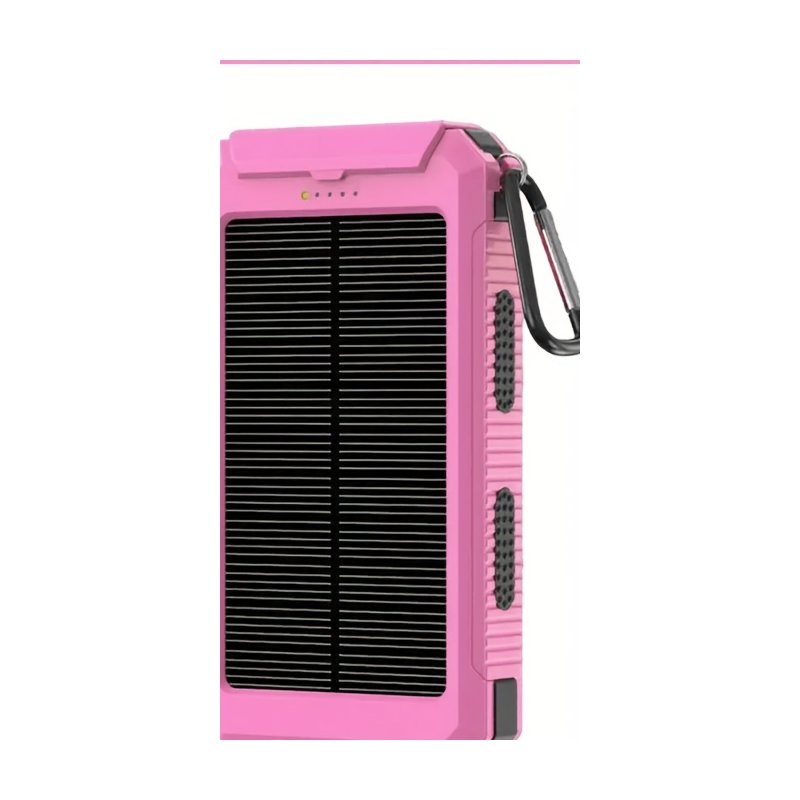
20,000mAh Solar Power Bank — Charges in the Sun
Your phone is your job — the lender's call, the gig app, the map. This 20,000mAh bank tops up from the sun and keeps your phone alive all shift. 4.7 stars.
$4.98 on Temu
See the power bank on TemuAffiliate link: if you buy, this site may earn a commission at no extra cost to you. Price checked September 2026; Temu prices change often.
How fast do you have to pay, and what if you do not?
Fast. This is the second trap.
Many public and government auctions want full payment within 24 to 48 hours, in guaranteed funds — cash, a cashier's check, a money order, or a wire. Personal checks and, at many houses, credit cards for the full amount are not accepted. The big online houses give a little more room, but not much: IAA's window is the award day plus two days, and Copart's is three business days including sale day. Some public sales are stricter — Manheim's public buyers guide for one location requires payment by 4 p.m. on sale day.
Your bid is a contract. Win and walk away, and it costs you. At Copart, a car left unpaid after eight calendar days gets relisted and you owe 10% of the sale price, with a $600 minimum. At IAA, walking away can trigger a renege fee of $1,000 or 15%. Local houses commonly keep your deposit and ban you. There is no cooling-off period and no "my financing fell through" — there was never any financing.
The deposit at the door. Many auctions take money before you can bid: a refundable registration deposit, commonly a few hundred dollars in cash or a card hold, applied to your price if you win and returned if you do not. Copart's basic members can bid up to $2,000 with no deposit and put down 10% above that.
What should you check before you bid?
Third trap: the car is sold as-is, where-is. No warranty, no return. Whatever is wrong with it becomes yours at the fall of the hammer. At most auctions you can walk the lot during preview hours, look the car over, sit in it, and sometimes start it — you do not get a real test drive. The preview is your only inspection. Use all of it.
The pre-bid checklist:
- Check the title type first. Clean, salvage, and rebuilt titles are different worlds. A salvage car may need repairs and a state inspection before it can be registered, and some title types can never go back on the road.
- Bring a basic scanner and plug it in. If the car can be powered on, scan for codes and check the readiness monitors — several monitors "not ready" can mean codes were cleared to hide a fault. Our guide to a check engine light on a used car shows what to look for.
- Look for the expensive lies. Milky oil, transmission fluid that is dark and smells burnt, fresh puddles under the car, uneven tire wear that points to bent parts, and water lines or mud in the trunk that point to a flood.
- Test everything electrical you can reach. Windows, locks, lights, heat, and air conditioning. On a cheap car, dead air conditioning can cost close to what the car did.
- Price the fix before you bid, not after. If bid plus fees plus the known repair beats what the same car costs from a private seller, walk. There will be another sale next week.
Most tricks in common dealer traps have an auction cousin, and the cousin moves faster.
Recommended · Temu
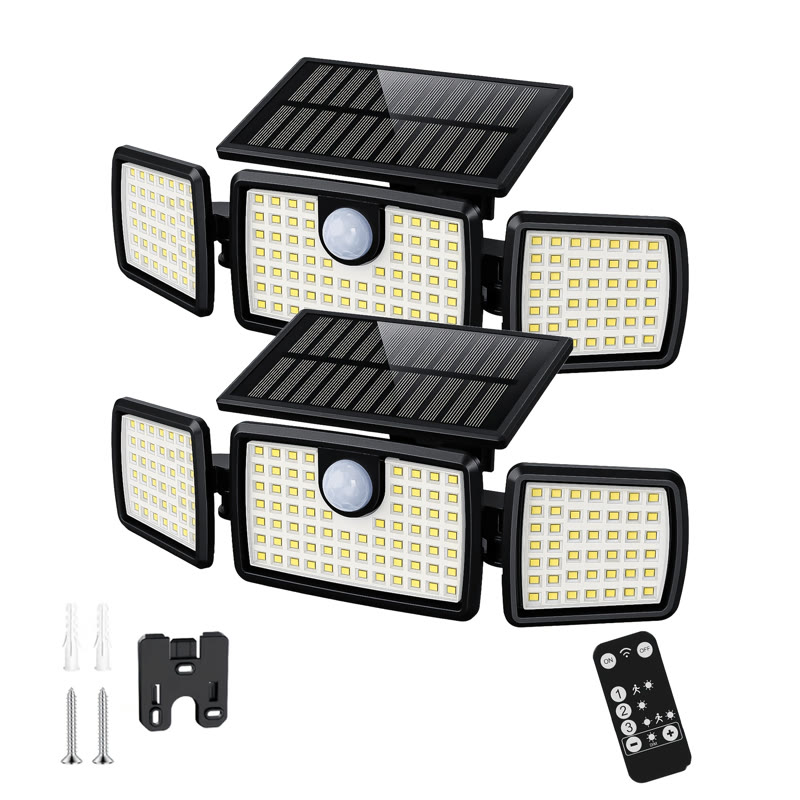
2-Pack 3-Head Solar Security Lights (3000LM, Motion Sensor)
Your car sits outside overnight — apartment lot, driveway, or street. This 2-pack of solar security lights (3000LM, motion sensor) keeps it lit and watched — no wiring, no electrician, no monthly cost.
$22.26 on Temu
See the solar lights on TemuAffiliate link: if you buy, this site may earn a commission at no extra cost to you. Price checked September 2026; Temu prices change often.
Recommended · Temu
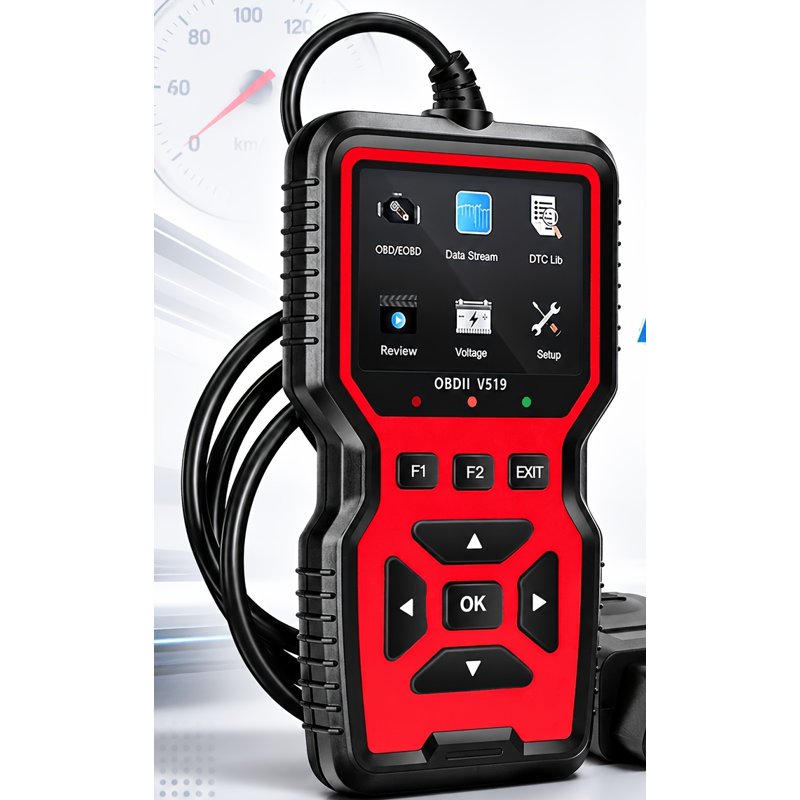
V519 OBD2 Scanner — Check Engine Code Reader
An auction car is sold as-is, and you do not get a test drive — the preview is your only chance to catch what the seller is not saying. Plug this scanner in before you bid and read the codes and readiness monitors yourself. If the memory was just cleared, you will see it before your cash is gone.
$17.01 on Temu
See the scanner on TemuAffiliate link: if you buy, this site may earn a commission at no extra cost to you. Price checked September 2026; Temu prices change often.

Recommended · Temu
1080P Video Doorbell Camera — Wireless, No Drilling
Your car sleeps in the apartment lot. This camera sticks on with no drilling, runs on a battery, and shows your front door — and who is near your car — right on your phone. 4.7 stars, 250K+ sold.
$9.98 on Temu
See the doorbell on TemuAffiliate link: if you buy, this site may earn a commission at no extra cost to you. Price checked September 2026; Temu prices change often.
Frequently asked questions
Do car auctions check your credit?
No, not at a public auction where you pay in full with your own money. There is no loan, so there is nothing to approve or deny. If a broker offers to finance your purchase, that separate lender can check your credit.
How much money should I bring beyond my bid?
Plan on fees being a large slice of a cheap car — $775 on a $2,000 bid in the example above, before tax. Hold back more for tax, registration, getting the car home, and the first repair. Work backwards from your total cash to your maximum bid.
Can I back out if I win and change my mind?
No. A winning bid is binding. Walking away can cost your deposit at a local house, a relist fee of 10% of the price with a $600 minimum at Copart, or a renege fee of $1,000 or 15% at IAA — and a ban can follow.
Can I test drive an auction car before I bid?
Usually not. Most auctions give you preview time to inspect the car, and some let you start it, but a road test is not part of the deal. The preview is the only look you get before the car and its problems are yours.
Do I need a dealer license to buy at auction?
Not at public, government, or police auctions — a government photo ID and registration are enough. You do need one for dealer-only wholesale auctions like the main Manheim and ADESA lanes. At IAA and Copart it depends on the state and the lot; some lots are open to public buyers, others require a license or broker.
<!-- sources: IAA (Insurance Auto Auctions) published non-licensed / standard-volume buyer fee schedule via IAA fee pages as reported Sep-Oct 2026 — buyer fee $535 in the $2,000-$2,399.99 band (buyer-fee table effective Nov 4, 2024), internet proxy bid fee $100 in the $2,000-$3,999.99 band, service fee $105, environmental fee $15, title-handling fee $20 (per-vehicle fees effective Jul 1, 2026); worked example $2,000 + $535 + $100 + $105 + $15 + $20 = $2,775 before tax/transport (the brief's ~$2,648 figure was adjusted to match this real published schedule); IAA public registration — public buyers need no business license, government photo ID, $225 annual membership (IAA Help Center); IAA payment window award day + 2 days by 5 p.m. local and renege fee $1,000 or 15% on day 7, Copart payment within 3 business days including sale day, $50 late fee, relist after 8 calendar days at 10% of sale price / $600 minimum, Copart gate fee $79 clean / $95 non-clean and $15 environmental fee (Copart U.S. non-licensed member fee schedule, as reported Sep-Oct 2026); LocalAuctions.com Peoria, AZ weekly public auto auction terms — 10% buyer's premium per vehicle plus $150 admin fee per vehicle (worked contrast: $2,000 bid = $2,350 before its 8.1% sales tax); Manheim / ADESA dealer-only access via state dealer license verified through AuctionACCESS, with limited public sales at select Manheim locations, and Manheim Baltimore-Washington public buyers guide — payment by 4 p.m. sale day, $1,000 deposit example, as-is sales (Manheim public auctions page and public buyers guide, via California Dealer Academy and CarSnipe reporting, Oct 2026); municipal / government auction practice — refundable registration deposits commonly $100-$500, full payment typically within 24-48 hours in guaranteed funds, as-is/where-is sales, removal within a few days before storage fees (municipal and impound auction rules guides, 2026). No APR or lender statistic is used — there is no loan in a cash auction purchase. -->