Upside-Down Car Loan: How to Trade In When You Owe More Than It's Worth
Quick answer: If you owe more than your car is worth, you can still trade it in — but the gap between what you owe and what the car is worth gets added to your new loan. On a $15,000 car with a $3,000 gap, you're financing $18,000. Knowing that math before you walk in is what keeps a dealer from burying you.
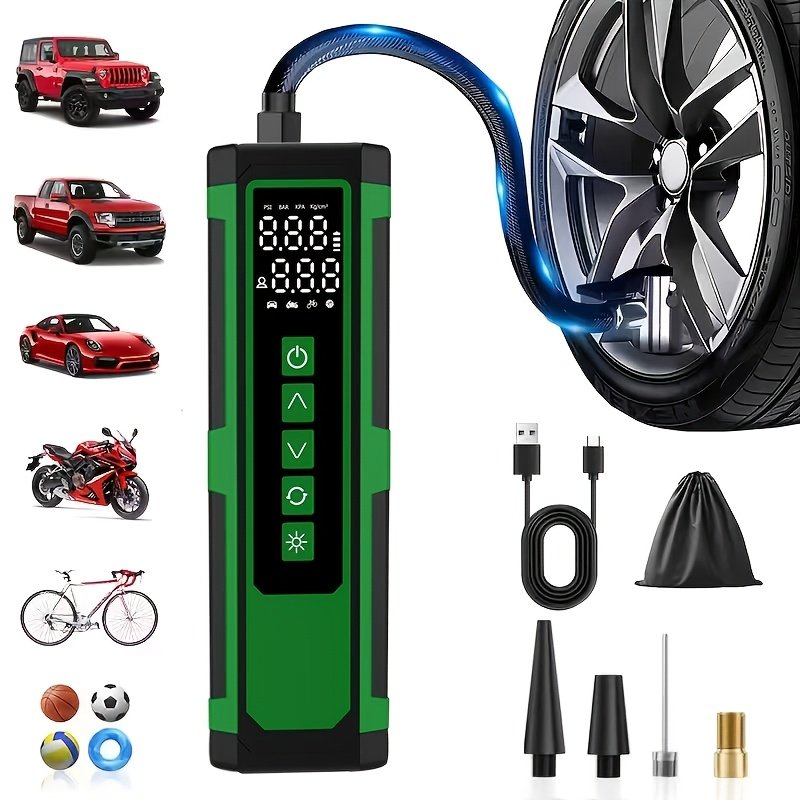
Recommended · Temu
Portable Tire Inflator — Cordless Air Pump (150 PSI)
A flat tire on the way to work can cost you the job that pays for the car. This cordless inflator rides in the trunk and fills a tire in minutes — no gas-station air pump, no tow truck. 4.8 stars, 35K+ sold.
$7.45 on Temu
See the inflator on TemuAffiliate link: if you buy, this site may earn a commission at no extra cost to you. Price checked September 2026; Temu prices change often.
Nobody told you this when you signed the loan papers: you can still owe money on a car the bank already sold once.
Here's how it happens. You buy a car for $14,000. A couple years later you still owe $8,000 — but the car is only worth $5,000. That $3,000 gap between what you owe and what the car is worth has a name: negative equity. People also call it being "upside down" or "underwater" on a car loan.
If that's you, read this sentence twice: it is not your fault, and you are not alone.
Edmunds reported that in the final months of 2025, nearly 3 out of 10 people trading in a car owed more than it was worth — the highest share in years. The average gap was $7,214, an all-time record. More than a quarter of those people were underwater by $10,000 or more. This is not some rare mistake. It's happening to millions of regular people, mostly because cars bought during the pandemic cost too much and lost value fast while the loan balances barely moved.
So if you feel ashamed about it — don't. You're standing in a very crowded line. Some of the people in that line were making good money not long ago. Cars lose value fast, and life hits faster — being upside down doesn't mean you were reckless.
The blunt truth the dealer won't say out loud
When you trade in a car you still owe on, that gap doesn't disappear. Somebody has to pay it. Usually, that somebody is you — just folded into the new loan so you don't notice.
Here's the math, plain and simple.
You owe $8,000. The dealer gives you $5,000 for your car. The gap is $3,000.
Now you pick a new car for $15,000. The dealer "rolls" that $3,000 into the new loan. Your new loan isn't $15,000. It's $18,000. You're paying interest on $18,000 for a $15,000 car.
That's how the trap starts. The Consumer Financial Protection Bureau puts it straight: your loan is now 120% of the car's value ($18,000 ÷ $15,000), and most lenders get nervous above 100%. The further above 100% you go, the worse your rate and terms get — and some lenders will simply say no.
And it gets worse. Edmunds found that people who roll negative equity into a new loan end up financing an average of $11,453 more than normal buyers, with monthly payments around $916 instead of the typical $772. Do it twice and you're not just underwater — you're drowning.
Watch for the oldest trick in the book. The FTC warns that dealers advertise "we'll pay off your loan no matter how much you owe!" and it sounds like a rescue. But many just roll the unpaid balance into your new loan. Your payment goes up. Your interest goes up. They didn't pay anything — you did.
Why this can bury you
Every time you roll old debt into a new loan, the hole gets deeper. You start the new loan already owing more than the car is worth. The car loses value the moment you drive off. The loan barely moves at first because early payments go mostly to interest. So a year later you're upside down again — and this time the gap is bigger.
That cycle is the real danger. Not one bad deal. The habit of one bad deal turning into the next.

Recommended · Temu
1080P Video Doorbell Camera — Wireless, No Drilling
Your car sleeps in the apartment lot. This camera sticks on with no drilling, runs on a battery, and shows your front door — and who is near your car — right on your phone. 4.7 stars, 250K+ sold.
$9.98 on Temu
See the doorbell on TemuAffiliate link: if you buy, this site may earn a commission at no extra cost to you. Price checked September 2026; Temu prices change often.
Your real options (all of them honest)
Here's the hope part: you have moves. Four of them. None are painless, but all of them beat doing nothing or doing the worst thing.
Option 1: Pay the gap in cash and trade in. Bring that $3,000 with you to the dealership. Pay off the difference at the table. Now your new loan is just the new car — clean. This is the simplest, cheapest way to break the cycle. The FTC itself recommends it: if the dealer promises to pay off the $3,000, make sure it isn't actually hiding inside your new loan.
Hard part: coming up with $3,000. Which brings us to...
Option 2: Wait and pay the loan down. The cheapest option of all is the one nobody wants to hear: keep the car and keep paying. Every payment shrinks the gap. The CFPB recommends making extra payments toward the principal — that's the part of your payment that actually lowers what you owe. Call your lender and ask how to make sure extra money goes to principal, not future interest.
If you can hold on even six months to a year while throwing extra cash at the loan, you might trade in at zero or close to it. No debt rolled in. No bigger hole.
Option 3: Pick a cheaper car. This is the move people resist most, and it saves the most money. If you're already underwater, financing a $15,000 car just adds $15,000 of new debt to the old debt. Financing a $9,000 car adds way less — and leaves room for the lender to approve the loan without scary terms.
Boring car. Lower payment. Loan ends sooner. The day you own a car free and clear, you will not care that it wasn't flashy.
Option 4: Sell the car yourself. A dealer gives you wholesale price — what they'd pay to resell it. A private buyer often pays more. If you can sell the car for $6,500 instead of the dealer's $5,000, your gap just shrank from $3,000 to $1,500. Yes, you still have to pay the difference yourself, and yes, your lender has to release the title so there's paperwork. But a smaller gap is a smaller problem.
Before you sign anything: do this math at home
The CFPB says you need exactly two numbers before you walk into any dealership:
- Your payoff amount — call your lender and ask for the exact payoff, not just your monthly statement balance. Those are different numbers.
- Your car's trade-in value — look it up on Kelley Blue Book or Edmunds using your exact mileage, trim, and condition. Use the trade-in value, not the private-sale value. Be honest about dings and wear.
Subtract: payoff minus value. If the answer is a positive number, that's your negative equity. That's the number nobody at the dealership will volunteer to explain to you — so know it before they do.
Then ask the dealer one direct question: "How exactly is my negative equity being handled in this deal?" Get it in the paperwork, not just spoken. The FTC's rule: don't sign until you understand the total amount borrowed, the monthly payment, and how the old debt was treated. If the numbers move when you sit down in the finance office, stand up — that's the setup for yo-yo financing, and our guide on that scam shows exactly how to shut it down.
And keep the new loan term as short as you can manage. A longer loan makes the monthly payment look smaller, but it keeps you underwater for years. A shorter loan hurts now and frees you sooner.
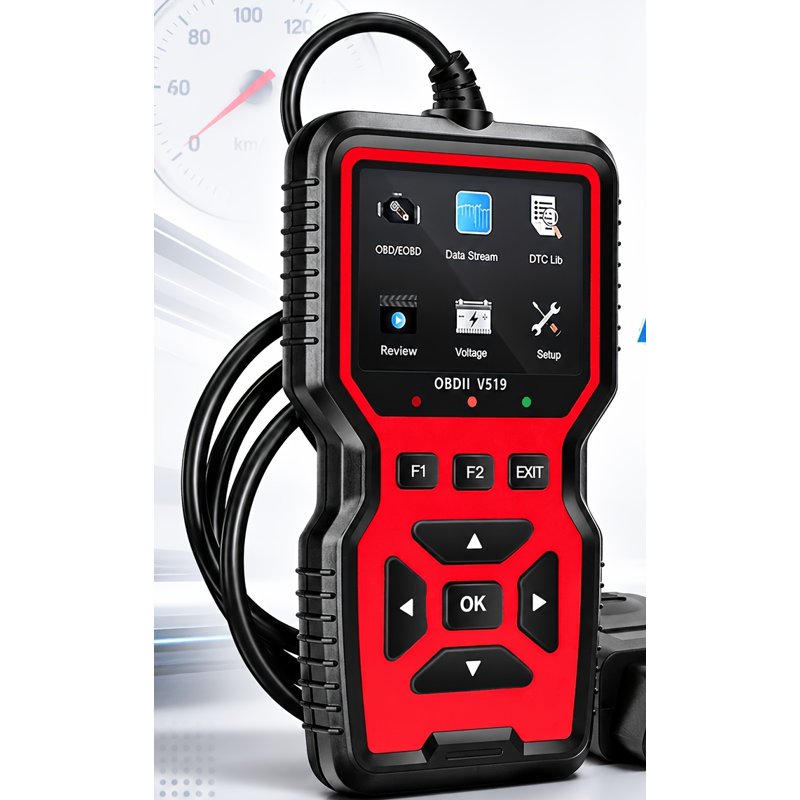
Recommended · Temu
V519 OBD2 Scanner — Check Engine Code Reader
Before you sign for that used car, plug this in under the dash and read the codes yourself. It shows check-engine codes and live data — the stuff a seller hopes you never check. 4.6 stars, 28K+ sold on Temu.
$17.01 on Temu
See the scanner on TemuAffiliate link: if you buy, this site may earn a commission at no extra cost to you. Price checked September 2026; Temu prices change often.
The practical playbook for the down payment
Here's where most people get stuck: the gap is $3,000 and they don't have $3,000. That's real. So let's talk about real ways to get there, not fantasy budgeting advice.
- Sell something. That TV you never watch, tools in the garage, clothes with tags on them. Facebook Marketplace moves stuff fast. $3,000 is a lot; $1,500 from selling things plus smaller payments is a plan.
- Throw $200 a month extra at the principal. In a year that's $2,400 off the loan — and because it hits principal, it closes the gap fast. Skip eating out twice a month if you have to. This is temporary.
- Ask about your tax refund. If a refund is coming, earmark it for the gap before it touches your pocket. Money with a job doesn't get spent.
- Side work for 60 days. Delivery driving, weekend labor, overtime — one short sprint of extra income aimed at one specific number. "I need $3,000 by June" is a goal you can see. "Save more money" is not.
- If a relative can help, borrow — don't roll. Borrowing $3,000 interest-free from family and paying them back beats financing $3,000 at 15% for six years. Swallow the pride. The math is brutal either way; pick the cheaper brutal.
The point is the same every time: the gap is a fixed number, and cash kills debt while new loans feed it.
If you're starting from scratch instead — no car, bad credit, just need wheels — our no-credit-check guide lays out the two plays that beat the lot with the biggest sign.
The bottom line
You're not stuck because you made a mistake. You're stuck because the system is built to roll your old debt into new debt and call it a solution. Now you see the machine. The $8,000 you owe and the $5,000 the car's worth — that $3,000 gap is beatable. People beat bigger ones every day.
The way out isn't a trick. It's the unglamorous stuff: know your two numbers, don't let anyone roll debt into your loan without you seeing it, and attack the gap with cash — even slow cash. The day your loan balance drops below your car's value, you've won. Everything after that is just driving.
Sources
- Edmunds Q4 2025 negative equity data (29.3% of trade-ins underwater, avg $7,214 record, $11,453 more financed): https://www.carscoops.com/2026/01/record-negative-equity-trade-ins-2026/
- CFPB on loan-to-value ratio and rolling negative equity: https://consumerfinance.gov/ask-cfpb/what-is-a-loan-to-value-ratio-in-an-auto-loan-en-769/
- CFPB auto loan glossary — negative equity definition: https://www.consumerfinance.gov/consumer-tools/auto-loans/answers/key-terms/
- FTC consumer alert — dealers rolling negative equity into new loans despite "pay off your loan" ads: https://webarchive.library.unt.edu/web/20121007120040mp_/http://www.ftc.gov/bcp/edu/pubs/consumer/alerts/alt083.pdf
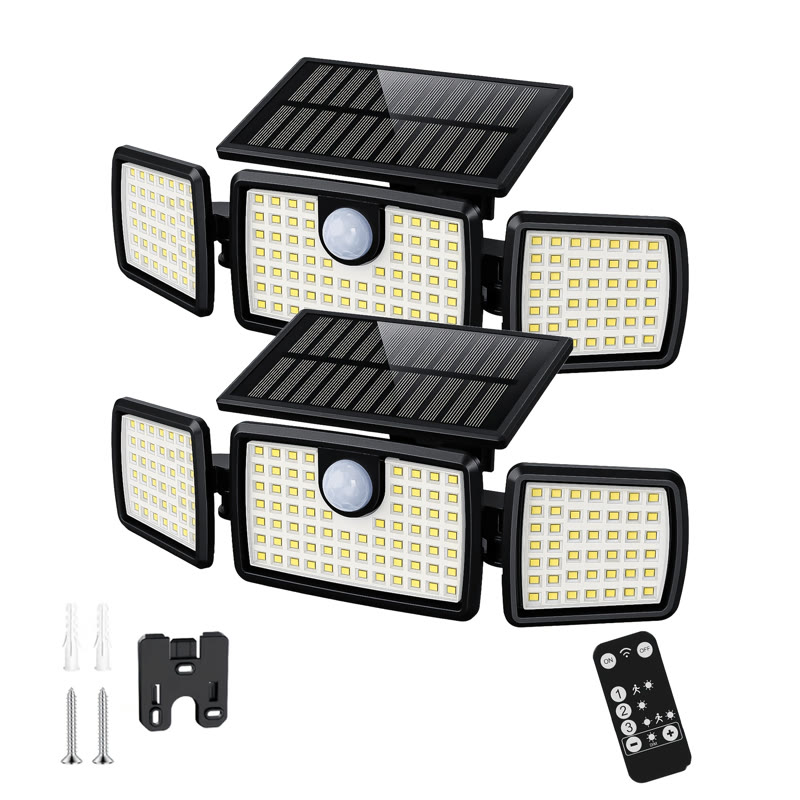
Recommended · Temu
2-Pack 3-Head Solar Security Lights (3000LM, Motion Sensor)
Digging out of negative equity usually means keeping your car longer — and it sits outside every night. This 2-pack of solar security lights (3000LM, motion sensor) keeps it lit and watched — no wiring, no electrician, no monthly cost.
$22.26 on Temu
See the solar lights on TemuAffiliate link: if you buy, this site may earn a commission at no extra cost to you. Price checked September 2026; Temu prices change often.

Recommended · Temu
21V Cordless Drill Kit — Full Tool Set in a Case
Every repair you do yourself is a payment you don't finance. This 21V drill kit comes with the bits and hand tools to start — brakes, batteries, and the small stuff. 4.7 stars, 49K+ sold.
$12.69 on Temu
See the drill kit on TemuAffiliate link: if you buy, this site may earn a commission at no extra cost to you. Price checked September 2026; Temu prices change often.
Frequently asked questions
Can I trade in a car if I owe more than it's worth?
Yes. The dealer pays off your old loan and adds the remaining balance — your negative equity — to the new loan. It works, but it means financing more than the new car is worth, at a higher rate or longer term. Know your payoff and trade-in value before you walk in.
How much negative equity can a dealer roll into a new loan?
Most lenders get nervous above 100% of the car's value. The higher you go, the worse the rate and terms — and some lenders will just say no, or demand cash down to close the gap.
Is it better to sell my car privately instead of trading it in?
You often get more from a private buyer than a dealer's wholesale trade-in offer, which shrinks your gap. The tradeoff is paperwork: your lender holds the title, so the sale has to be coordinated to release it. If the math works, the extra effort pays.
Should I just keep the car and keep paying?
Often yes — it's the cheapest option. Every payment shrinks the gap, and extra payments toward principal shrink it faster. If the car runs fine, six to twelve months of steady payments can take you from underwater to break-even.
What does "we'll pay off your loan no matter what you owe" really mean?
It's advertising, not charity. The FTC warns that many dealers simply roll your unpaid balance into the new loan — your payment goes up, your interest goes up, and they paid nothing. Always ask how the old debt is being handled and get it in the loan paperwork, not just spoken.