Can You Get a Car Loan on SSI or SSDI?
Quick answer: Yes. Car lenders count SSI and SSDI benefits as income, and you prove it with your Social Security award letter and bank statements showing the deposits. Owning the car itself won't hurt your benefits: SSDI has no asset limit at all, and SSI completely excludes one automobile from its resource limit as long as it's used for transportation.

Recommended · Temu
Solar & USB LED Lantern — COB Work Light
When the power goes out, this is your light. It charges from the sun or any USB port — no candles, no wiring, nothing to install. 4.7 stars, 100K+ sold.
$4.94 on Temu
See the lantern on TemuAffiliate link: if you buy, this site may earn a commission at no extra cost to you. Price checked September 2026; Temu prices change often.
Here's the blunt truth nobody at the dealership will tell you: your disability check is income. Real, countable, lendable income. And it's some of the most stable income a lender will ever see — it doesn't get laid off, it doesn't lose hours, and it shows up on schedule every month.
The fear underneath this question is usually worse: "If I buy a car, will I lose my benefits?" For most people, the answer is no — and Social Security's own rules explain why. There are traps, especially on SSI, but they're specific and avoidable. Let's walk through all of it.
Does disability income count as income for a car loan?
Yes. When a lender looks at your application, they care about two things: how much money comes in every month, and whether it will keep coming. Benefit income passes both tests. It's documented by the federal government and paid on a fixed schedule.
Some lenders will even count your benefit as more than the amount on the check. Here's why: SSI and SSDI payments aren't taxed the way wages are. Mortgage underwriting guidelines from Fannie Mae let lenders "gross up" verified non-taxable income by 25% — counting, say, $1,600 a month as $2,000 — because a tax-free dollar goes further than a taxed one. Not every auto lender does this, but some do. It's worth asking directly: "Do you gross up non-taxable income?"
What actually decides your approval is the same as for anyone else: your credit history, your other monthly debts, and whether the payment fits your budget. If credit is the weak spot, that's a separate, fixable problem — not the same as "no income."
Will buying a car hurt your SSDI benefits?
No. SSDI — Social Security Disability Insurance — is insurance you earned by working and paying Social Security taxes. It has no asset limit and no resource limit. Social Security does not count your savings, your property, or your car when deciding your SSDI eligibility or payment amount. You can own a car, own two cars, have money in the bank — none of it touches your SSDI check. (SSDI does limit how much you can earn from working, but that's a separate rule, unrelated to buying a car.)
Recommended · Temu
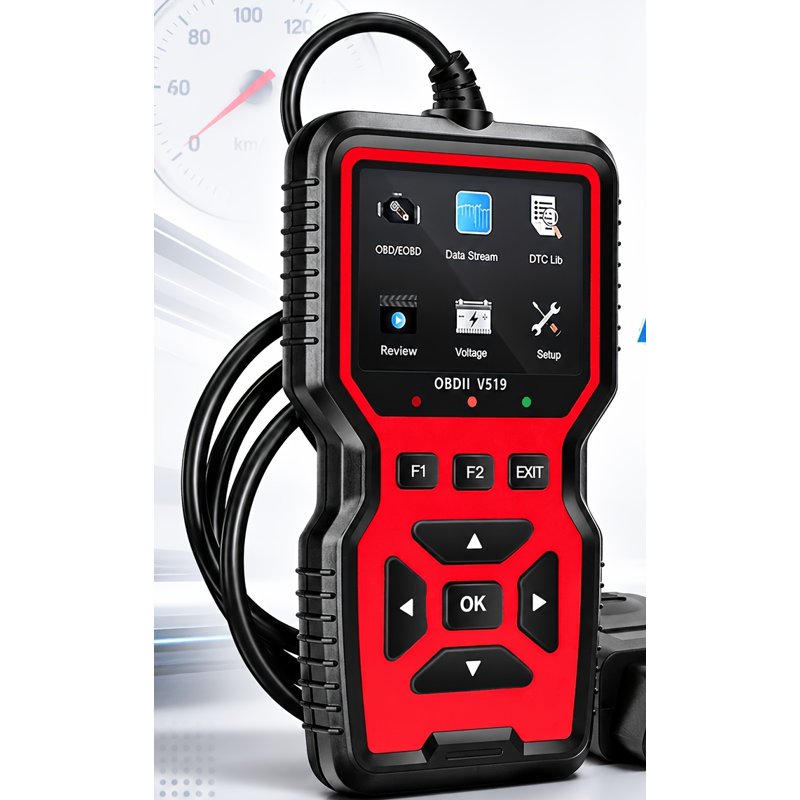
V519 OBD2 Scanner — Check Engine Code Reader
Before you sign for that used car, plug this in under the dash and read the codes yourself. It shows check-engine codes and live data — the stuff a seller hopes you never check. 4.6 stars, 28K+ sold on Temu.
$17.01 on Temu
See the scanner on TemuAffiliate link: if you buy, this site may earn a commission at no extra cost to you. Price checked September 2026; Temu prices change often.
Will buying a car hurt your SSI benefits?
This is where the one real trap lives — and where the good news is better than most people expect.
SSI is needs-based, so it does have a resource limit: $2,000 for an individual, $3,000 for a couple. Countable resources include cash and bank accounts. Go over the limit and your benefits are at risk.
But here is the rule that makes car ownership possible. In Social Security's own words, from its program manual: they "exclude completely one automobile per household regardless of value if the recipient... or a member of the recipient's household uses it for transportation." The regulation behind it is 20 CFR 416.1218.
Read that again: regardless of value. A $3,000 sedan and a $25,000 SUV count exactly the same — zero — as long as it's the household's one car and it's used for transportation: medical appointments, the store, work, daily life. The car you buy with the loan does not count against your $2,000.
Two warnings that come straight from the same rules:
- A second vehicle is different. Only one car per household gets the full exclusion. The equity in a second vehicle — what it's worth minus what you owe — counts as a resource. If you already own a car, trading it in as part of this purchase keeps you safe.
- Your bank account does count. Cash sitting in savings is a countable resource on SSI. That's the trap for the down payment, and it's covered next.
What about saving up the down payment on SSI?
For bad-credit buyers, the down payment is the central obstacle — it's what turns a no into a yes and a brutal rate into a survivable one. On SSI, it has an extra wrinkle: money parked in your bank account counts toward that $2,000 resource limit. Save $2,500 for a down payment in a regular account and you can accidentally save yourself out of your benefits.
Ways real people handle this:
- Buy sooner with a smaller down payment. A modest down payment made quickly spends less time sitting in your account than a big one saved slowly.
- Time the purchase inside the month. SSI counts resources as of the first moment of the month. Money that comes in and goes out toward the car within the same month never sits there on a count date. (Confirm your exact situation with Social Security first — timing rules are unforgiving.)
- Ask Social Security about excluded savings. Certain accounts and plans don't count the same way. A quick call to your local office before you save is worth more than a guess.
And if the down payment math just won't work, don't stop there — car assistance programs exist in most states specifically to help people on limited incomes get reliable transportation.
Recommended · Temu
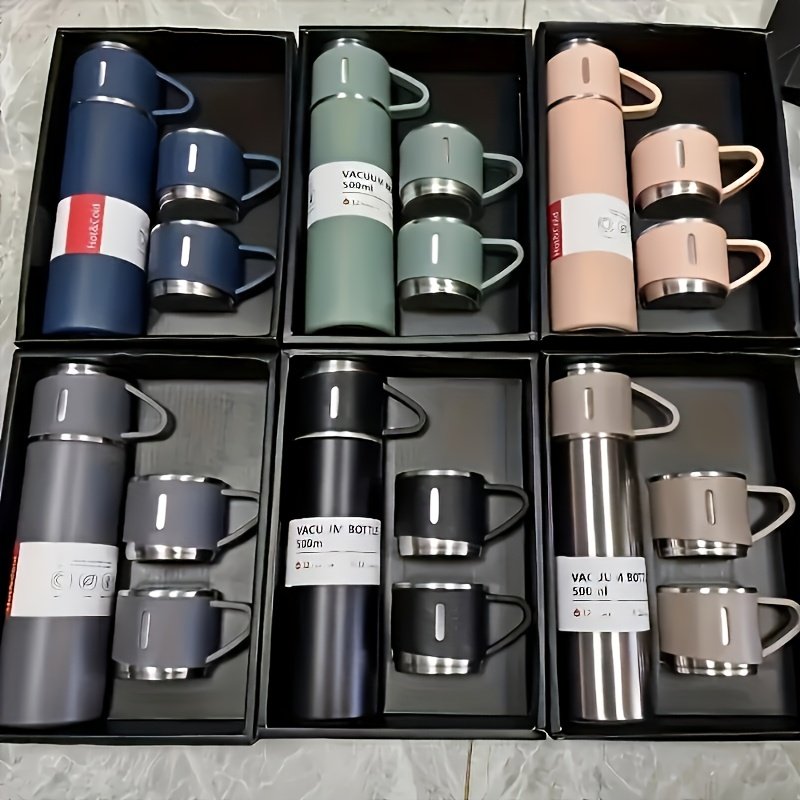
Insulated Cup Set — 4 Bottles & Cups, Gift Boxed
Coffee stays hot through a whole shift, and the set pays for itself in a week of skipped coffee runs. Four insulated bottles and cups, boxed up nice. 4.5 stars, 89K+ sold.
$5.18 on Temu
See the cup set on TemuAffiliate link: if you buy, this site may earn a commission at no extra cost to you. Price checked September 2026; Temu prices change often.
What proof of income do you need?
No pay stubs? No problem. Lenders who work with benefit income ask for documents you likely already have:
- Your SSA award letter (benefit verification letter). This is the big one — it states your monthly benefit amount. You can download it from your my Social Security account on ssa.gov or request it by phone.
- Bank statements. Usually the last two or three months, showing the Social Security deposits landing on schedule. This is how the lender confirms the letter matches reality.
- Your most recent SSA-1099, if you have it — the yearly statement of benefits paid.
Bring all three and your income is as documented as any paycheck. If you also earn money another way — part-time work within your program's limits, or self-employment — our guide to getting a car loan when you're self-employed covers those proofs.
How do you give yourself the best shot at a yes?
- Start at a credit union. They work with benefit income every day, their rates beat subprime dealer financing, and a pre-approval tells you your real price range before you fall for a car.
- Borrow small and boring.A reliable used car with a payment that fits inside your monthly benefit — with room for insurance, gas, and repairs — is the approval profile lenders like.
- Bring the documents in a folder. Award letter, bank statements, ID, proof of address. Walking in prepared changes the whole conversation.
- Keep it to one car. Especially on SSI — one vehicle, used for transportation, fully excluded. Simple and safe.
Your check is not a weakness in that application. It's the steadiest income on the lender's desk that day.
Recommended · Temu
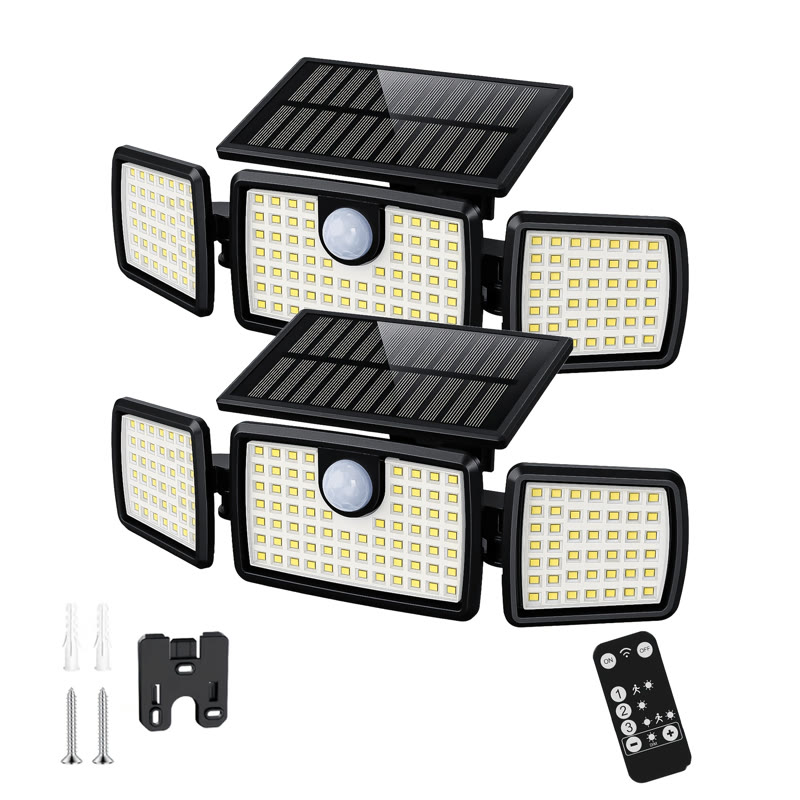
2-Pack 3-Head Solar Security Lights (3000LM, Motion Sensor)
Stable income deserves a safe car outside. This 2-pack of solar security lights (3000LM, motion sensor) keeps it lit and watched overnight — no wiring, no electrician, no monthly cost.
$22.26 on Temu
See the solar lights on TemuAffiliate link: if you buy, this site may earn a commission at no extra cost to you. Price checked September 2026; Temu prices change often.

Recommended · Temu
21V Cordless Drill Kit — Full Tool Set in a Case
Every repair you do yourself is a payment you don't finance. This 21V drill kit comes with the bits and hand tools to start — brakes, batteries, and the small stuff. 4.7 stars, 49K+ sold.
$12.69 on Temu
See the drill kit on TemuAffiliate link: if you buy, this site may earn a commission at no extra cost to you. Price checked September 2026; Temu prices change often.
Frequently asked questions
Can I get a car loan with SSI and bad credit?
Yes — it happens every day. The lender will weigh your credit history, your other debts, and the size of the payment against your benefit. A credit union or a lender that regularly works with benefit income is your best first stop, and a down payment, even a small one, strengthens the application.
Does Social Security count a financed car as a resource on SSI?
No. One automobile per household is completely excluded from SSI resources regardless of its value, as long as you or a household member use it for transportation. It doesn't matter whether you own it outright or are still making payments.
How much car can I afford on disability income?
Work backwards from the monthly check. Add up your must-pay bills first — rent, food, medicine, insurance — and the car payment has to fit in what's honestly left, with a cushion for repairs and gas. Lenders run the same math: total monthly debts compared to total monthly income.
Will a car loan affect my SSDI payment amount?
No. SSDI has no asset or resource limit, and taking on a loan doesn't change your benefit. Your SSDI amount is based on your work record, not on what you own or owe.
Can a dealership refuse to count my disability income?
Lenders can set their own documentation standards, but disability benefits are a lawful, verifiable source of income and mainstream lenders count them every day. If one dealer waves you off without looking at your award letter, take your paperwork to a credit union instead — that's not a sign your income doesn't count.
<!-- sources: SSA POMS SI 01130.200 (secure.ssa.gov) — "exclude completely one automobile per household regardless of value if the recipient or couple or a member of the household uses it for transportation," policy effective April 2005; 20 CFR 416.1218 (automobile exclusion); 20 CFR 416.1205 (SSI resource limits $2,000 individual / $3,000 couple). SSA SSI Spotlight on Resources (ssa.gov/ssi/spotlights/spot-resources.htm) — countable resources include bank accounts; one automobile excluded. SSDI: no asset/resource test — eligibility based on insured status and disability under 42 USC 423 (SSDI is an earned insurance benefit; SSA does not count resources). Gross-up: Fannie Mae Selling Guide general income guidance — lenders may add 25% of verified non-taxable income to qualifying income; framed in the article as "some lenders" for auto loans. -->