Do Car Lenders Call Your Employer?
Quick answer: Yes, car lenders sometimes verify your employment — most often on subprime loans, thin credit files, or stated-income applications. But a phone call is the backup method. Most lenders first check pay stubs or an employment database, and when they do call, they only confirm that you work there, your job title, and your start date. Your employer is not told anything about your loan.

Recommended · Temu
6x4 Ft Brown Outdoor Storage Shed with Lockable Double Doors
Just bought the car? Clear the garage so it actually fits. This weatherproof steel shed has lockable double doors — and no monthly storage-unit bill.
$137.21 on Temu
See the shed on TemuAffiliate link: if you buy, this site may earn a commission at no extra cost to you. Price checked September 2026; Temu prices change often.
Here's the blunt truth: sometimes, yes. And if your credit is bruised, "sometimes" gets a lot closer to "probably." It's not personal and it's not the dealer being nosy — it's the lender protecting a loan that might run five or six years on a car they know they can repossess only at a loss.
The fear underneath this question is usually one of two things: "Will my boss find out I'm buying a car?" or "What happens if they call and it goes wrong?" Both fears are bigger than the reality: the call, when it happens at all, is short, boring, and routine. Here's exactly how it works.
Who actually does the checking — the dealer or the lender?
The lender. The dealership collects your application and sends it out (which is why dealerships run your credit so many times), but the bank, credit union, or finance company putting up the money sets the rules for proving your income and job.
That means the same application can be handled two different ways depending on who funds it:
- Strong credit? Many prime lenders approve on your stated income and credit report alone. No call, no stubs, no fuss.
- Subprime credit — roughly below the low 600s? Verification becomes a hard requirement, not a formality. When the score can't vouch for you, the paycheck has to. This is also where stated-income deals live: the lower the documentation, the harder the lender checks what you stated.
- Something looks off? Income that doesn't match the job, a brand-new employer, or numbers that don't fit your credit profile can trigger verification even on a decent score.
Think of it this way: the lender is asking one question — "Will this paycheck still be there in month thirty?" Everything below is just them answering it.
How do lenders verify employment without calling?
Most of the time, nobody calls anybody. Lenders usually verify in this order:
An employment database. Many large lenders check The Work Number, a payroll database run by Equifax. If your employer reports payroll data to it, the lender can confirm your job title, start date, employment status, and salary in seconds — without your workplace ever knowing a check happened.
Your documents. Recent pay stubs — typically covering the last 30 days, showing your name, your employer's name, and year-to-date earnings — prove both the job and the income at once. This is the most common verification of all.
Bank statements. If the database comes back empty and documents are thin, lenders may ask for two or three months of statements to see payroll deposits landing on a regular schedule.
Only when those routes fail does an actual phone call come into it.
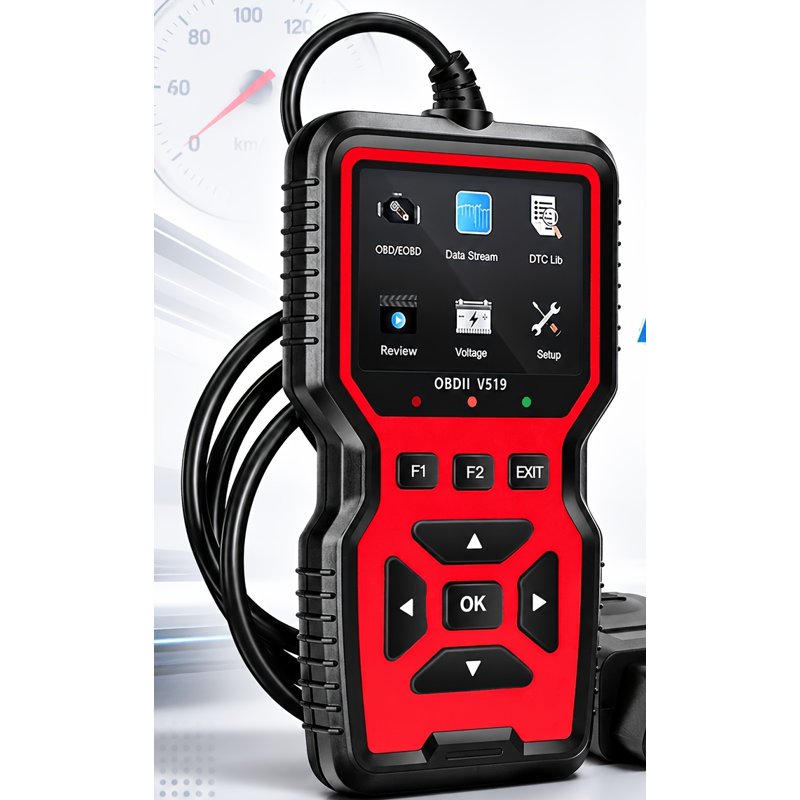
Recommended · Temu
V519 OBD2 Scanner — Check Engine Code Reader
Before you sign for that used car, plug this in under the dash and read the codes yourself. It shows check-engine codes and live data — the stuff a seller hopes you never check. 4.6 stars, 28K+ sold on Temu.
$17.01 on Temu
See the scanner on TemuAffiliate link: if you buy, this site may earn a commission at no extra cost to you. Price checked September 2026; Temu prices change often.
What do they ask if they do call your employer?
A Verification of Employment call is short and narrow. The lender (or a verification service working for them) calls HR or a designated contact and confirms the basics:
- That you currently work there
- Your job title
- Your start date
- Whether the job is full-time, part-time, or seasonal
Salary confirmation varies. Some employers confirm income as part of the call; many will only verify it in writing or through the database, and some company policies limit them to confirming status and dates only. Either way, the lender has your pay stubs for the income number — the call is about whether the job is real and current.
What they do not get: performance reviews, disciplinary history, health information, or anything about your life. And the lender does not tell your employer your loan amount, your credit score, or what car you're buying. To HR, it's a formality they've done a thousand times.
One practical tip: if you know a call is likely, give your HR department or manager a quiet heads-up — "a lender may call to verify my employment for a car loan." It removes the one real risk, which is a confused receptionist saying "I can't confirm that" and stalling your deal for a day.
What matters more than the call: how stable your job history looks
Honestly, the call itself is the smallest part of this. What lenders are really reading is stability — how long you've been at this job, and if you changed jobs, whether you stayed in the same line of work.
- Two years at the same employer with steady pay stubs is one of the strongest things on a subprime application. It can carry a weak score a long way.
- A recent job change into the same field usually reads fine — people move up. Three unrelated jobs in eight months reads as risk.
- Time at your address gets the same look. Job stability plus address stability is the profile subprime lenders trust, because it's the profile that keeps paying in year three.
That's good news if your credit is a mess but your work life is steady: on this kind of application, your job history is doing real work for you.

Recommended · Temu
21V Cordless Drill Kit — Full Tool Set in a Case
Every repair you do yourself is a payment you don't finance. This 21V drill kit comes with the bits and hand tools to start — brakes, batteries, and the small stuff. 4.7 stars, 49K+ sold.
$12.69 on Temu
See the drill kit on TemuAffiliate link: if you buy, this site may earn a commission at no extra cost to you. Price checked September 2026; Temu prices change often.
What if you're self-employed?
Then there's no employer to call — and lenders know it. Instead of a call, you'll prove the income yourself with paper: typically your last two years of tax returns with Schedule C, 1099 forms if clients issue them, and several months of bank statements showing the money coming in. Our full guide on getting a car loan when you're self-employed walks through exactly what to bring and how lenders average that income.
What if you just started the job — or you're between jobs?
This is the situation people actually lose sleep over, so plainly:
New job, same field: Workable. Bring your offer letter — it shows the employer, the position, the start date, and the salary — plus your first pay stub or two as they arrive. Lenders see job changes constantly; a step sideways or up in the same trade is a normal story, told with documents.
New job, brand-new field: Harder. Some lenders want a few months on the job first. A bigger down payment and a smaller loan shrink the risk enough that some will say yes anyway.
Between jobs right now: Be honest on the application — stating a job you don't have is fraud, and it's the one version of this story that ends truly badly. Real options instead: wait until the new job starts and you have an offer letter and a stub; bring in a cosigner with verifiable income; or look at whether this purchase can wait sixty days, because sixty days of pay stubs changes the whole conversation. If this is your first car and your file is thin overall, our guide for buying your first car with no credit maps the whole path.

Recommended · Temu
2-Pack 3-Head Solar Security Lights (3000LM, Motion Sensor)
The job gets you the car; the lights watch it while you work. This 2-pack of solar security lights (3000LM, motion sensor) keeps it lit and watched overnight — no wiring, no electrician, no monthly cost.
$22.26 on Temu
See the solar lights on TemuAffiliate link: if you buy, this site may earn a commission at no extra cost to you. Price checked September 2026; Temu prices change often.
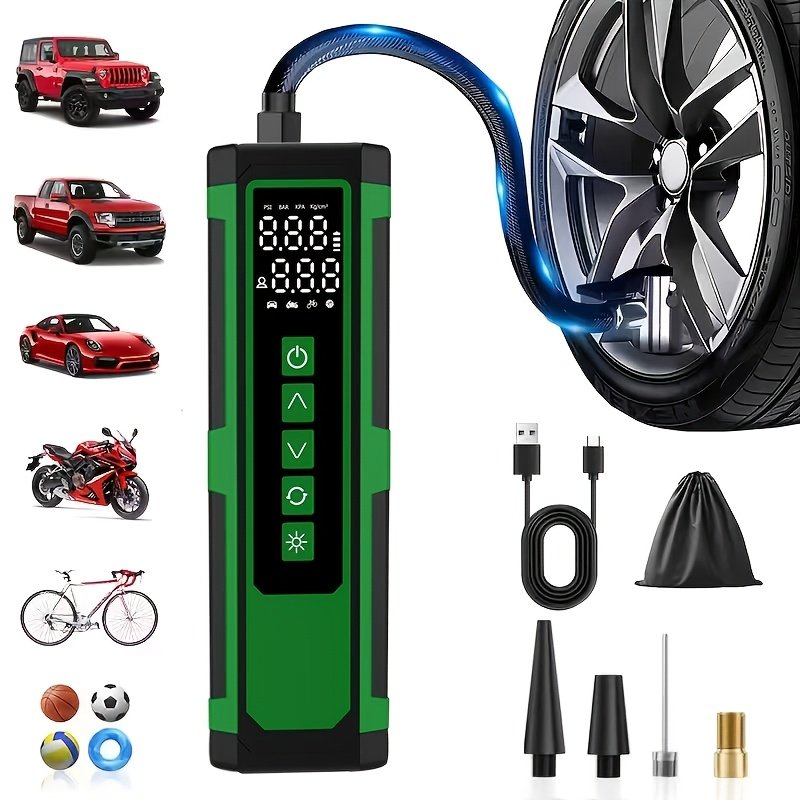
Recommended · Temu
Portable Tire Inflator — Cordless Air Pump (150 PSI)
A flat tire on the way to work can cost you the job that pays for the car. This cordless inflator rides in the trunk and fills a tire in minutes — no gas-station air pump, no tow truck. 4.8 stars, 35K+ sold.
$7.45 on Temu
See the inflator on TemuAffiliate link: if you buy, this site may earn a commission at no extra cost to you. Price checked September 2026; Temu prices change often.
Frequently asked questions
Will my employer know I'm buying a car?
Only that someone verified your employment. The lender doesn't share your loan amount or credit situation, and many employers never get a call at all because the lender used a database or your pay stubs instead.
Can a lender call my employer after I've already driven the car home?
It can happen. Some dealers let you take the car before the loan is fully funded — a "spot delivery" — and if the lender's verification fails afterward, the deal can unravel and the dealer may ask you to return the car or accept different terms. This is one reason to complete verification before you drive off whenever you can.
What happens if the lender can't reach my employer?
Usually the application just slows down. The lender will ask you for backup proof — more pay stubs, bank statements showing payroll deposits, or a letter from the employer. Unreachable is not the same as denied; you just supply the paper yourself.
Do buy here pay here lots call your employer?
Often, yes — and sometimes references too. Because these lots lend their own money and frequently skip the credit check, your current job and income carry the whole approval. Expect pay stubs at minimum, and don't be surprised by a verification call.
Can I refuse to let the lender contact my employer?
You can decline, but the lender can decline right back — verification is a condition of their loan, not a legal requirement you can waive. If privacy at work is the concern, ask the lender to verify through pay stubs and bank statements instead; many will, especially if the documents are clean and consistent.
<!-- sources: Employment-verification practice for auto lending — lender (not dealer) sets verification requirements; subprime/stated-income deals treat verification as a hard requirement while prime approvals often accept stated income; methods in order: Equifax The Work Number database (job title, start date, status, salary without a call), recent pay stubs (typically last 30 days with year-to-date earnings), bank statements, then manual Verification of Employment calls confirming current employment, title, start date, and full/part-time status, with salary confirmation varying by employer policy; employers do not receive loan details. Sources: LegalClarity guides on dealership employment and income verification (citing The Work Number/Equifax and CFPB references), cross-checked against CFPB consumer guidance on auto loan shopping (consumerfinance.gov). No statute claims made — verification described as lender policy, consistent with sources noting no federal law mandates income verification for auto loans. -->