Can You Buy a Car with a 450, 500, or 550 Credit Score? (Real Rates and Down Payments)
Quick answer: Yes — people buy cars at 450, 500, and 550 every day. A 450 and a 500 sit in Experian's deepest tier, where used-car APR averaged 21.62% in Q2 2026. A 550 sits in the next tier, at 19.10%. What changes as your score climbs is the rate — and how much car the same payment buys.

Recommended · Temu
Solar & USB LED Lantern — COB Work Light
When the power goes out, this is your light. It charges from the sun or any USB port — no candles, no wiring, nothing to install. 4.7 stars, 100K+ sold.
$4.94 on Temu
See the lantern on TemuAffiliate link: if you buy, this site may earn a commission at no extra cost to you. Price checked September 2026; Temu prices change often.
A 450 credit score feels like a life sentence.
It feels like the number speaks before you do. And when your car dies, it feels like the reason you'll lose the job and keep paying for rides.
Here's the blunt truth: a 450 is not a life sentence. It's a price tag. People with scores in the 400s buy cars every single day. They just pay more for the loan — and nobody showed them the map of how much more, or where the price drops.
This is the map. Lenders don't price your exact score. They price tiers — score ranges — and your rate is set by which range you land in. The numbers, from Experian's State of the Automotive Finance Market report, Q2 2026:
| Credit score | Used-car APR | New-car APR | Average used-car payment | Average amount financed (used) |
|---|---|---|---|---|
| 300–500 (deep subprime) | 21.62% | 16.11% | $570/month | $22,071 |
| 501–600 (subprime) | 19.10% | 13.52% | $567/month | $22,777 |
| 601–660 (near prime) | 13.93% | 9.71% | $555/month | $26,960 |
| 661–780 (prime) | 8.81% | 6.15% | $528/month | $29,090 |
| 781–850 (super prime) | 6.29% | 4.41% | $534/month | $29,937 |
One honest note: these tiers are built on the VantageScore scale. Your lender may pull a different score — a FICO score, or an auto-specific version — so the dealer's number may not match the one on your phone. The tier you land in is usually close. Treat your score as a map, not a photograph.
Look at the payment column. The deepest-tier buyer pays $570 a month — only about $36 more than the super prime buyer's $534 — because he finances far less: $22,071 against $29,937. At a rate three times higher, the car has to be cheaper to keep the payment alive. At a low score, the price of the car matters more than the payment.
Can you buy a car with a 450 credit score?
Yes — but read this next part carefully, because it's the part nobody tells you.
A 450 sits in the deepest tier there is: 300 to 500, where Experian's average used-car rate is 21.62%. That is an expensive loan, and pretending otherwise would be lying to you. On a $15,000 loan over five years, the payment is about $411 a month — and roughly $9,663 of what you pay back is pure interest. Nearly ten grand for the privilege of borrowing fifteen.
So the 450 playbook is not "get approved." It's "get approved for the right amount":
- The down payment. Most subprime lenders typically want $1,000 or 10% of the car's price, whichever is less — cash, trade-in value, or a mix. It's lender practice, not law, and individual lenders vary, but it's the floor to plan around.
- The income. Most subprime lenders typically want $1,500 to $2,500 a month in gross income — pay before taxes — usually from one job, proven with a recent pay stub.
- The smart price target. Lenders typically cap your payment at 15% to 20% of gross monthly pay — on $2,500 a month before taxes, $375 to $500. At 21.62% over five years with $1,000 down, that window means a car priced roughly $15,000 to $19,000 — and at this rate you want the low end. Every extra thousand borrowed is repaid at the worst rate on the chart.
Some buyers at 450 go to a buy here pay here lot instead, where the lot is the lender and $500 down is a common starting point. That door is real — know the trade: prices and rates typically run higher, and many lots don't report on-time payments to the credit bureaus. That matters below.
Can you buy a car with a 500 credit score?
Yes — and here's the honest surprise: a 500 is priced almost exactly like a 450.
Five hundred feels like a milestone. You crossed out of the 400s. But look at the table: the deepest tier runs 300 to 500, so a 500 is the top edge of the same tier as a 450 and gets the same 21.62% average rate. The lender's pricing sheet throws no party for reaching 500.
That cuts two ways. Bad news: climbing from 450 to 500 hasn't lowered your rate yet. Good news — and it's genuinely good: you are one point from the tier line. A 501 is a different tier at 19.10%. No other point on the scale is worth as much.
Everything else matches the 450 playbook: the same down payment floor ($1,000 or 10% of the price, whichever is less), income range, and payment cap of 15% to 20% of gross pay — on $2,500 a month, the same price range: around $15,000 to $19,000 with $1,000 down, low end preferred. The score didn't change your tier. It changed how close you are to the next one.

Recommended · Temu
1080P Video Doorbell Camera — Wireless, No Drilling
Your car sleeps in the apartment lot. This camera sticks on with no drilling, runs on a battery, and shows your front door — and who is near your car — right on your phone. 4.7 stars, 250K+ sold.
$9.98 on Temu
See the doorbell on TemuAffiliate link: if you buy, this site may earn a commission at no extra cost to you. Price checked September 2026; Temu prices change often.
Can you buy a car with a 550 credit score?
Yes — and at 550, your money finally starts working harder.
A 550 sits in the subprime tier, 501 to 600, where Experian's average used-car APR is 19.10%. Still expensive — nobody's giving you a prime rate at 550 — but watch what the drop from 21.62% does. On that same $15,000, five-year loan, the payment falls to about $390 a month and total interest to roughly $8,396. Same car, same loan: about $21 a month cheaper, about $1,270 less interest handed to the lender.
Flip it around. Lenders still typically cap your payment at 15% to 20% of gross pay. A $500 payment at 19.10% finances about $19,200 of car; at 21.62% it finances about $18,200. One tier up, the same paycheck carries about $1,000 more car — or the same car with a payment that breathes easier.
The down payment doesn't change at 550: most subprime lenders still typically want $1,000 or 10% of the price, whichever is less. Only the rate changed — but the rate was the expensive part.
What changes when your score crosses 500 — and then 600?
Everything — and not gradually. Your rate doesn't slide point by point. It jumps at the tier lines, and the second jump is the big one.
Run the same loan three ways: $15,000 financed, five years, nothing changes but the tier.
- At 500 or below (21.62%): about $411 a month, about $9,663 in total interest.
- At 501 to 600 (19.10%): about $390 a month, about $8,396 in total interest. Crossing 500 saves you roughly $21 a month — about $1,270 over the loan.
- At 601 to 660 (13.93%): about $348 a month, about $5,909 in total interest. Crossing 600 saves roughly another $42 a month — about $2,490 over the loan.
From the bottom tier to near prime, the same $15,000 car costs about $63 less a month and roughly $3,750 less in interest — the identical car. That's why the tier lines are the whole game. A 498 and a 503 look like twins and price like strangers. And 600 is the line that matters most: five points there can be worth more than fifty points anywhere else.
Recommended · Temu
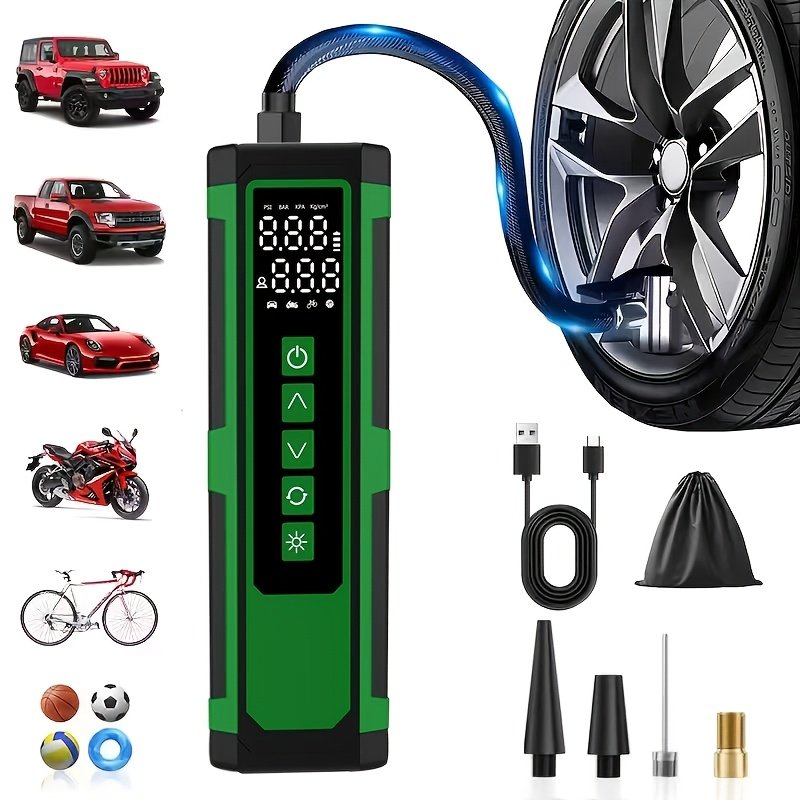
Portable Tire Inflator — Cordless Air Pump (150 PSI)
A flat tire on the way to work can cost you the job that pays for the car. This cordless inflator rides in the trunk and fills a tire in minutes — no gas-station air pump, no tow truck. 4.8 stars, 35K+ sold.
$7.45 on Temu
See the inflator on TemuAffiliate link: if you buy, this site may earn a commission at no extra cost to you. Price checked September 2026; Temu prices change often.
How do you move up a tier while you own this car?
With the car itself — if you buy it the right way.
A regular subprime lender reports your loan to the credit bureaus as a normal part of its business. Every on-time payment lands on your credit report, and a year of them is one of the strongest signals a damaged file can send. That's why the reporting question matters at a buy here pay here lot: a loan nobody reports can't rebuild anything. Ask before you sign whether your on-time payments get reported — not just the late ones — and get the answer in writing.
Then, the refinance door: after 6 to 12 months of on-time payments, many buyers can refinance — replace the expensive loan with one priced at the better tier their higher score now earns. It's common practice, not a promise; it depends on your score climbing and the car's value holding up against what you owe. But it's a well-worn path: buy at the rate your score earns today, pay on time, then re-price the loan at the rate your new score earns.
The trap to avoid is the opposite move — trading in early and rolling the old loan's balance into a new one. That doesn't move you up a tier. It digs the hole deeper while the car gets older.
Want to see what your score and down payment can carry? Run your numbers through the down payment calculator on this site.
Sources: Experian, State of the Automotive Finance Market, Q2 2026 (APR, payment, and amount-financed figures by tier). Down payment, income, and payment-to-income figures reflect typical subprime lender practice as reported by CarsDirect and Auto Credit Express; individual lenders vary.
Recommended · Temu
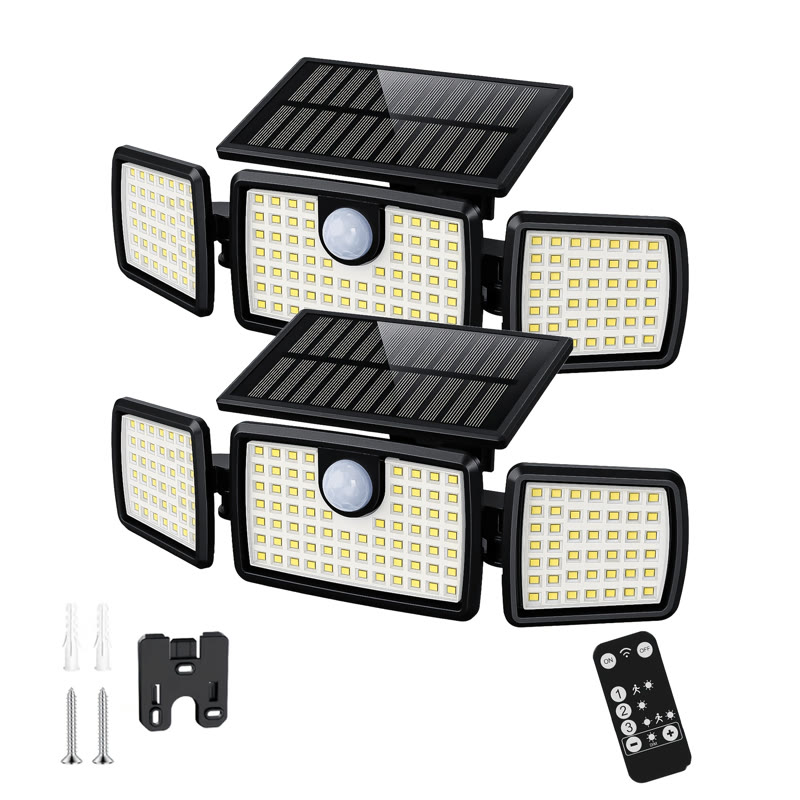
2-Pack 3-Head Solar Security Lights (3000LM, Motion Sensor)
Know your tier before the dealer quotes you a rate. And protect the car you worked so hard to buy with these solar security lights (3000LM, motion sensor) — under $20, no wiring, no electrician, no monthly cost.
$22.32 on Temu
See the solar lights on TemuAffiliate link: if you buy, this site may earn a commission at no extra cost to you. Price checked September 2026; Temu prices change often.

Recommended · Temu
21V Cordless Drill Kit — Full Tool Set in a Case
Every repair you do yourself is a payment you don't finance. This 21V drill kit comes with the bits and hand tools to start — brakes, batteries, and the small stuff. 4.7 stars, 49K+ sold.
$11.97 on Temu
See the drill kit on TemuAffiliate link: if you buy, this site may earn a commission at no extra cost to you. Price checked September 2026; Temu prices change often.
Frequently asked questions
Is 450 the worst a credit score gets?
No. Scores start at 300 — and here's what matters: everyone from 300 to 500 sits in the same pricing tier, averaging the same 21.62% used-car rate in Experian's Q2 2026 numbers. A 450 is not treated worse than a 499. You're in a tough tier, but you're not at the bottom of anything.
Does the dealer see the same score I see?
Often not the exact number. There are different scoring models, and many auto lenders pull an auto-specific version that weighs past car payments more heavily. The numbers can differ noticeably — but they usually land you in the same neighborhood, which is why knowing your tier matters more than knowing your exact digits.
Will a bigger down payment beat a bad score?
It doesn't change your tier, so it usually doesn't change the rate you're offered — the score sets the rate. What it does is shrink the loan: less borrowed at a painful rate, a lower payment, less total interest, an easier approval. The score fixes your rate. The down payment fixes your math. You need both working.
Should I wait and fix my score first?
Honestly, it depends on what waiting costs you. If you can wait a few months and realistically push across a tier line — especially 600 — the savings are real: about $2,490 in interest on a $15,000 loan. But if waiting means losing shifts, paying for rides that cost more than a payment, or risking the job itself, don't wait. Buy the right-sized car now, from a lender who reports your payments, and let the loan do the fixing. Waiting is a strategy. Needing to get to work is a fact.
How much income do I need to get approved at these scores?
Most subprime lenders typically require $1,500 to $2,500 a month in gross income — before taxes — usually from one job, proven with a recent pay stub showing year-to-date earnings. Buy here pay here lots set their own rules and often work with less, since they finance the car themselves.