Can You Refinance a Bad Credit Car Loan After 6 to 12 Months?
Quick answer: Yes. After about six months of on-time payments — payments your lender actually reports — check your score and get refinance quotes inside a 14-day window. Moving up one credit tier can save around $1,000 in interest on a typical loan. It only wins if the new loan's total cost is lower, not just the payment.

Recommended · Temu
2-Pack 3-Head Solar Security Lights (3000LM, Motion Sensor)
Your car sits outside overnight — apartment lot, driveway, or street. This 2-pack of solar security lights (3000LM, motion sensor) keeps it lit and watched — no wiring, no electrician, no monthly cost.
$22.32 on Temu
See the solar lights on TemuAffiliate link: if you buy, this site may earn a commission at no extra cost to you. Price checked September 2026; Temu prices change often.
The first loan you got with bad credit was never supposed to be fair.
Twenty-one percent interest. A payment that makes you wince every month. You signed it because you needed the car to get to work, and the dealer knew it.
Here's the blunt truth nobody tells you at signing: that loan is the price of re-entry. It was never meant to be the price you pay for five years.
Because that loan does something for you while you pay it. Every on-time payment that gets reported to the credit bureaus is proof — proof you can hand to the next lender. Six months of proof won't erase your past. But it can change your price. That's what refinancing is: selling your new track record to a lender who'll charge you less for the same car.
Here's how it works, when it works, and when it's a trap.
When does refinancing start to make sense?
Short answer: around six months of on-time payments is the checkpoint worth testing — not a rule, a checkpoint.
No lender publishes a law that says "wait six months" or "wait twelve." Experian recommends waiting at least six months before refinancing, and the reasoning is practical. Six months gives your score time to recover from the hard inquiries you took when you bought the car. Six months of on-time payments gives a new lender something real to look at. And some lenders won't refinance until they've held your loan a while anyway, so waiting widens your choice of lenders instead of narrowing it.
Three things have to be true for the checkpoint to mean anything:
- Your payments report. A loan nobody reports builds nothing. Regular lenders report as a normal part of business. If you bought at a buy here pay here lot, check whether your on-time payments are landing on your credit reports — not just the late ones. If they're not, this whole strategy is running on empty.
- Your score actually moved. Refinancing re-prices you at the tier your score earns now. If nothing has changed — same score, same debts — the new quote will look like the old one, and waiting longer is the better move.
- Something else improved. Experian lists the other honest triggers: market rates have fallen since you bought, your income went up, or your debts went down. Any one of them strengthens the application.
Six to twelve months is the window most buyers test. Test it. Just don't treat the calendar as the qualification — the payments are.
What rate could you actually get?
Lenders price tiers, not individual scores. Experian's State of the Automotive Finance Market report, Q2 2026, puts average used-car APRs at:
- 300–500 (deep subprime): 21.62%
- 501–600 (subprime): 19.10%
- 601–660 (near prime): 13.93%
- 661–780 (prime): 8.81%
These are averages for each score range, not quotes — your offer depends on your file, the car, and the lender. But watch what one tier is worth. This is an example, computed from those published averages:
Say you borrowed $15,000 over five years at 21.62% — the deepest tier's average. Your payment is about $411 a month, and if you rode that loan to the end, roughly $9,663 of what you pay back would be interest.
Now say six on-time payments are behind you and your score has climbed one tier, into the 501–600 range. You still owe about $14,100. Refinance that balance at 19.10% — the next tier's average — over the 54 months you had left, and your payment drops to about $392, with roughly $1,050 less interest still ahead of you. Climb two tiers, to 13.93%, and the payment falls to about $353, with roughly $3,100 less interest ahead. Same car. Same payoff date. The only thing that changed is the proof on your credit report.
That's the whole game: buy at the rate your score earns today, then re-price the loan at the rate your new score earns.
Recommended · Temu
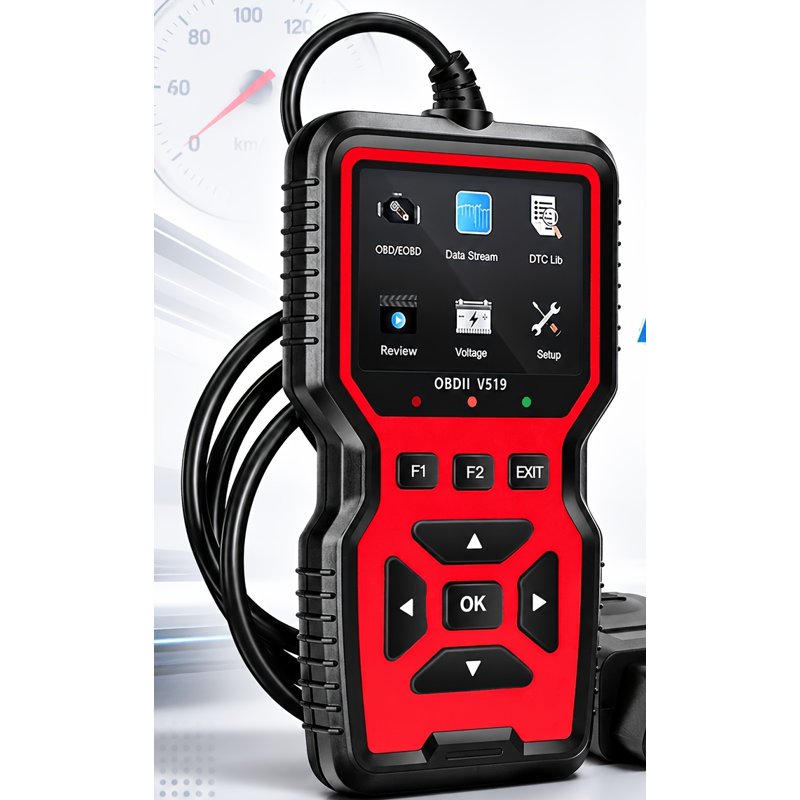
V519 OBD2 Scanner — Check Engine Code Reader
Before you sign for that used car, plug this in under the dash and read the codes yourself. It shows check-engine codes and live data — the stuff a seller hopes you never check. 4.6 stars, 28K+ sold on Temu.
$13.96 on Temu
See the scanner on TemuAffiliate link: if you buy, this site may earn a commission at no extra cost to you. Price checked September 2026; Temu prices change often.
How do you shop without hurting your score?
Get every quote inside one 14-day window.
Here's why. Each refinance application puts a hard inquiry on your credit report. One inquiry is small — for most people it takes fewer than five points off a FICO Score, and the dip usually fades within a few months. But the scoring models know the difference between one desperate application and a buyer comparing lenders. Inquiries for the same kind of loan bunched into a short window get counted as one. The window is 45 days on newer FICO versions and 14 days on older ones, and Experian advises finishing your rate shopping within 14 days so you're covered either way.
So do it like this: pick your two weeks. Apply to your own bank or credit union first — you don't need an existing relationship to ask, but it doesn't hurt. Then two or three other lenders who work with your score range. Get every quote in writing: rate, term, and total cost, not just the payment. Then compare the totals side by side.
Want a sanity check on what your income and score can carry before you apply? Run your numbers through the approval calculator on this site.
When is refinancing a trap?
Three ways this move backfires. Know all three before you sign anything.
You're underwater. If you owe more than the car is worth — negative equity — many lenders won't approve the refinance at all, or they'll require you to pay the difference first. The ones who will refinance it roll the gap into the new loan, so you're financing more than the car is worth and digging the hole deeper at a fresh rate. A lower rate on a bigger hole is not a win.
The term stretches. A lower payment is the easiest trick in the business. Take that same $14,100 balance at 19.10% but stretch it over a fresh 60 months instead of the 54 you had left, and the payment falls to about $367 — while the interest still ahead of you is roughly $7,900, barely better than the roughly $8,100 you'd pay by changing nothing. Stretch it further and the "better" loan costs more than the bad one. The test is never the payment. The test is total cost: add up everything you'll still pay on the old loan, add up everything you'd pay on the new one — every payment, every fee — and refinance only if the second number is smaller.
You're near the end. If only a year or two is left on your loan, most of what remains is principal, not interest. There's little interest left to save, and fees — including a possible prepayment penalty on your current loan, which you should check for in your contract — can eat what little there is.
The first loan got you driving. The payments are getting you out. Check at six months. Shop inside fourteen days. And let the total cost — never the payment — make the decision.
Sources: Experian, State of the Automotive Finance Market, Q2 2026 (used-car APR averages by credit score tier), and Experian consumer guidance on refinancing, April and November 2026. Inquiry and rate-shopping windows per myFICO, Experian, and the Consumer Financial Protection Bureau (CFPB). Negative equity and loan-to-value per the CFPB. The six-to-twelve-month window reflects common lender practice and Experian's six-month recommendation — it is not a lender rule or an eligibility requirement. The loan examples are computed from Experian's published tier averages and are illustrations, not rate quotes.

Recommended · Temu
6x4 Ft Brown Outdoor Storage Shed with Lockable Double Doors
Just bought the car? Clear the garage so it actually fits. This weatherproof steel shed has lockable double doors — and no monthly storage-unit bill.
$139.91 on Temu
See the shed on TemuAffiliate link: if you buy, this site may earn a commission at no extra cost to you. Price checked September 2026; Temu prices change often.
Recommended · Temu
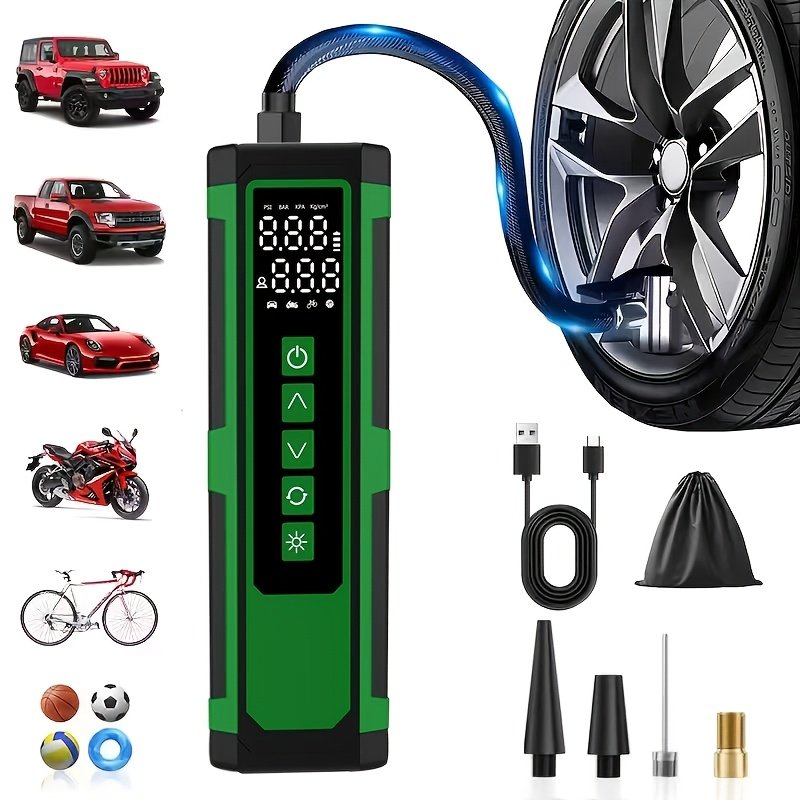
Portable Tire Inflator — Cordless Air Pump (150 PSI)
You're paying this car off the smart way — keep it rolling. This portable cordless tire inflator rides in the trunk and fills a tire in minutes, so a flat never turns into a missed shift or a late payment.
$7.45 on Temu
See the inflator on TemuAffiliate link: if you buy, this site may earn a commission at no extra cost to you. Price checked September 2026; Temu prices change often.

Recommended · Temu
21V Cordless Drill Kit — Full Tool Set in a Case
Every repair you do yourself is a payment you don't finance. This 21V drill kit comes with the bits and hand tools to start — brakes, batteries, and the small stuff. 4.7 stars, 49K+ sold.
$11.97 on Temu
See the drill kit on TemuAffiliate link: if you buy, this site may earn a commission at no extra cost to you. Price checked September 2026; Temu prices change often.
Frequently asked questions
Does refinancing a car loan hurt my credit?
A little, briefly. Each application adds a hard inquiry — typically fewer than five points off a FICO Score — and the dip usually fades within a few months. Shop inside a 14-day window and the scoring models count your auto-loan inquiries as one. The new loan also lowers your average account age, but a run of on-time payments outweighs that over time.
How many months of on-time payments do I need before I can refinance?
There's no fixed rule — no lender publishes one. Experian recommends waiting at least six months so your score can recover from the purchase inquiries and your payment history can build; six to twelve months is the window most buyers test. What qualifies you isn't the calendar. It's a score that's actually climbed and payments a new lender can see.
Can I refinance if I owe more than my car is worth?
It's hard. Many lenders won't approve a refinance on an underwater loan, or they'll require you to pay the difference first. Some will roll the gap into the new loan, but that means financing more than the car's value — usually a bad trade. If you're underwater, paying the balance down is often the stronger move.
Will refinancing definitely lower my rate?
No. Nothing guarantees it. The averages above are what borrowers in each score range paid in Q2 2026 — not promises. If your score hasn't moved, your income hasn't changed, and market rates haven't fallen, the quotes will look like the loan you already have. In that case the honest move is to keep paying on time and test again in a few months.