What to Bring When You Buy a Car with Bad Credit (Checklist That Gets You Approved)
Quick answer: Bring a folder, not hope: 30 days of pay stubs, proof of where you live, your license, five to eight references, and your down payment ready. Get a preapproval from your bank or credit union first, so the dealer's rate has to beat a real number. Add-ons are optional. Get the total price in writing.
Recommended · Temu
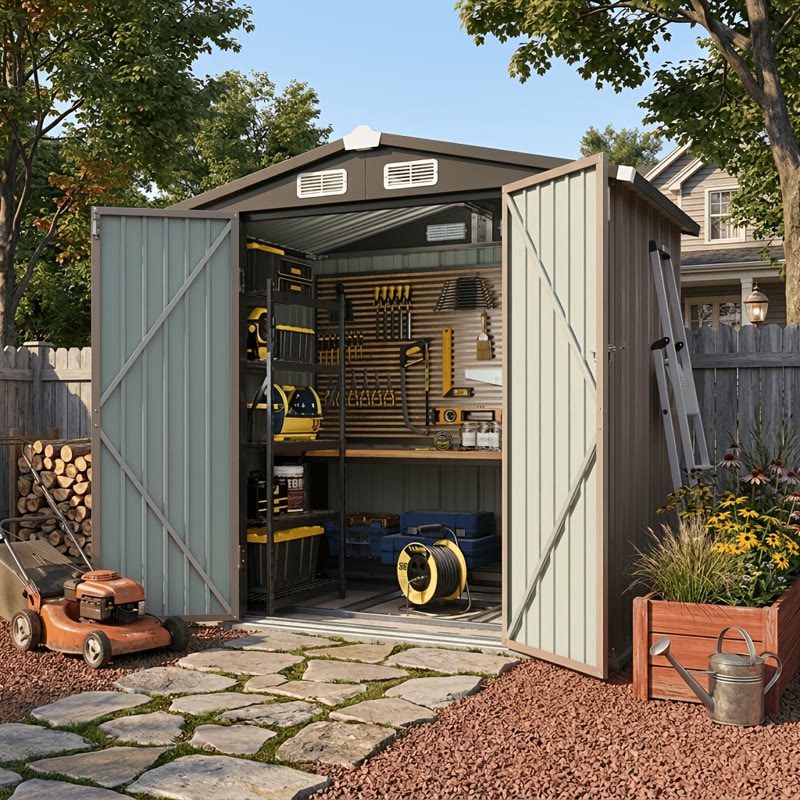
6x4 Ft Brown Outdoor Storage Shed with Lockable Double Doors
Just bought the car? Clear the garage so it actually fits. This weatherproof steel shed has lockable double doors — and no monthly storage-unit bill.
$139.91 on Temu
See the shed on TemuAffiliate link: if you buy, this site may earn a commission at no extra cost to you. Price checked September 2026; Temu prices change often.
Most bad-credit buyers walk into a dealership empty-handed. No folder. No numbers of their own. Just a hope and a prayer that somebody in that building says yes.
Here's what nobody tells you: hope is not a strategy the finance office respects. The buyer who walks in with a folder under his arm and a preapproval in his pocket — a real rate, from a real lender, with his name on it — gets treated like a different species. Because to a lender, he is one. He's not asking for a favor. He's bringing a deal.
Your credit score is what it is today. You can't rewrite it in the parking lot. But preparation is the one part of this purchase you control completely. This is the checklist: what to bring, what to say, and what to watch for when the paperwork comes out.
What documents do you bring?
Short answer: everything a lender would ask for, in a folder, before anyone asks. Subprime lenders run on paperwork — the word they use is "stipulations" — and most stalled or denied approvals are just missing paper.
What subprime lenders typically ask a bad-credit buyer for:
- Pay stubs. Computer-generated stubs from the last 30 days, showing year-to-date income. Most subprime lenders typically want $1,500 to $2,500 a month in gross income — pay before taxes — usually from a single source, proven with those stubs. Self-employed or paid on a 1099? Bring two to three years of tax returns — Form 1040 with Schedule C — plus your 1099 forms. That's your pay stub.
- Proof of where you live. A recent utility bill or bank statement with your name and address on it.
- Your driver's license. Valid and current.
- Proof of insurance. Financing requires full coverage, so have your policy information ready, or be prepared to arrange it before you drive off.
- References. A list of five to eight personal references, with phone numbers. Yes, really — and buyers get sent home for not having it ready.
- A working phone in your name. It sits right alongside the pay stubs in lender requirement lists.
- Your trade-in's title, if you're trading in a car.
- Bankruptcy discharge papers, if a bankruptcy is part of your story.
- Your down payment, ready to pay. The typical subprime floor is $1,000 or 10% of the car's price, whichever is less — cash, trade-in equity, or a mix. There's no special document that proves your down payment. The requirement is the money itself, in hand, on the day.
And one free move before any of it: pull your own credit reports at AnnualCreditReport.com. They're free, and the CFPB tells every buyer to check them before applying. Know what's in your file before a dealer tells you what's in it.
Why get preapproved before the dealer?
Short answer: because a preapproval is a real number from a real lender — and it turns the dealer's interest rate from a verdict into a negotiation.
Here's how it works, per the CFPB's auto loan guide. A preapproval is a loan quote you get from a bank, credit union, or other lender before you go car shopping. It states three things: an interest rate, a loan term, and a maximum loan amount, based on your credit, the terms, and the type of vehicle you're considering. You don't need an existing account or relationship with the lender to apply. The CFPB advises getting one or more quotes before visiting a dealership — it puts you in a better bargaining position and could save you hundreds or thousands over the life of the loan.
Now compare that to the dealer's version. When a salesman says "you're approved," that's dealer-arranged financing: the dealer collects your information and forwards it to one or more lenders, and you never deal with the lender directly. A verbal "you're approved" is not a lender quote — it carries no rate, no term, and no maximum yet. Those numbers get decided later, in the finance office, where you hold the least leverage you'll have all day.
There's one more number to know: the buy rate. The CFPB's current consumer guidance explains that when a lender agrees to finance your loan through a dealer, it quotes the dealer a rate — the buy rate. The dealer is then allowed to offer you a higher rate, the contract rate, as compensation for arranging the loan — and that contract rate may be negotiable. Do the simple math on a markup: on a $15,000 loan over five years, two extra points of interest add roughly $1,000 you didn't have to pay.
Walk in preapproved, and that game reverses. The dealer isn't naming your rate. He's trying to beat one.
Want to know what loan amount your income can actually support before you apply anywhere? Run your numbers through the approval calculator on this site.
Recommended · Temu
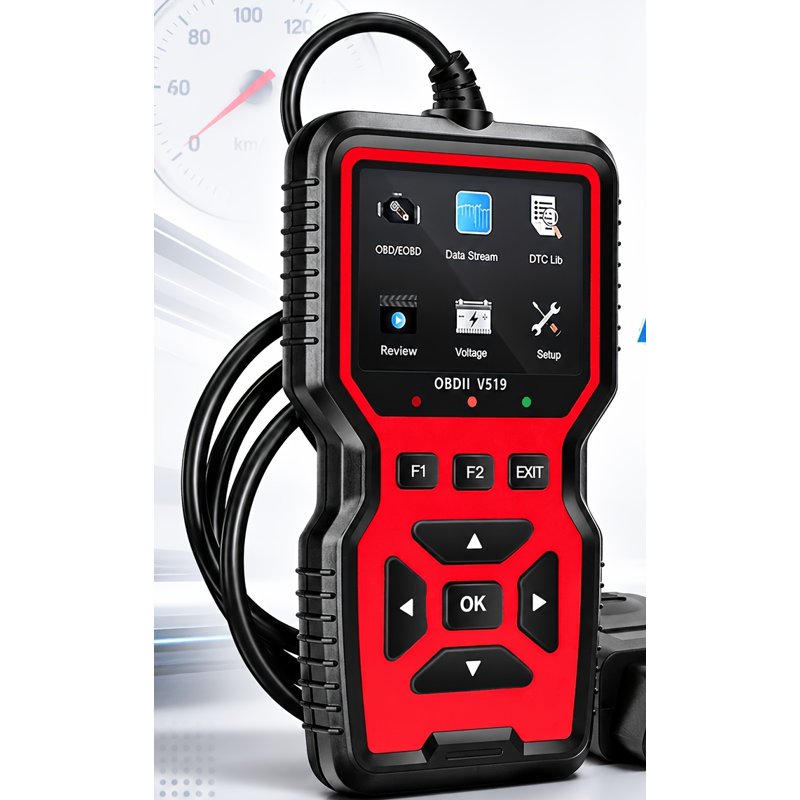
V519 OBD2 Scanner — Check Engine Code Reader
Before you sign for that used car, plug this in under the dash and read the codes yourself. It shows check-engine codes and live data — the stuff a seller hopes you never check. 4.6 stars, 28K+ sold on Temu.
$13.96 on Temu
See the scanner on TemuAffiliate link: if you buy, this site may earn a commission at no extra cost to you. Price checked September 2026; Temu prices change often.
What do you say at the dealership?
Short answer: price first, financing second, and every charge explained out loud before you sign anything.
The sequence matters. Run it in this order:
1. Talk total price before you talk payments. The FTC advises asking the dealer to send you the out-the-door price in writing before you even leave home — the total price, including all charges and fees. In writing, you can compare offers apples-to-apples and spot charges that materialize later. If the conversation opens with "what monthly payment are you looking for," pull it back: let's settle the price of the car first.
2. Put your preapproval on the table. "I'm preapproved at this rate, up to this amount. Beat it, and I'll finance here." Now the dealer is competing against a real number instead of inventing one — and the rate he offers may sit above the buy rate his lender quoted him, and may be negotiable.
3. Compare loans by total cost, never by monthly payment. This is core CFPB guidance: a lower monthly payment generally just means a longer loan and more total interest — and a longer loan keeps you owing more than the car is worth for longer. Before you're legally obligated, federal Truth in Lending rules require written disclosures: the APR, the finance charge, the amount financed, and the total of payments. Read the total of payments. That is what the car actually costs you. And know your own ceiling first: subprime lenders typically cap your car payment — insurance included — at about 15% to 20% of your gross monthly income, and your total debts at about 45% to 50%. A payment built outside that window is a payment built to fail.
4. Take add-ons one at a time, out loud. Extended warranty? GAP? Tire protection? For each: what does it cost, and what does it cover? Then a yes or a no, separately. Nothing rides along silently — the next section explains why.
What are the traps in the finance office?
Short answer: three of them — a payment with charges packed inside it, a rate marked up above what the lender quoted the dealer, and add-ons presented as required when they're not.
Trap one: payment packing. The FTC has a name for the slickest move in the finance office. In its August 2024 complaint against the Asbury Automotive dealer group, the FTC described it this way: the dealer gets you to agree to a monthly payment larger than the car actually requires — its example was a $400 payment quoted when the vehicle's real contract payment was $350 — then "packs" add-ons into the contract to fill the gap. You approved a payment. You never approved the charges inside it. The FTC also reported that as many as 75% of surveyed buyers at that group said add-ons had been tacked on secretly or falsely claimed to be required. Your defense is the sequence above: settle the total price first, then audit every charge that builds the payment.
Trap two: the marked-up rate. You know this one's mechanics — buy rate versus contract rate, straight from the CFPB's current guidance. If the rate waiting in the finance office is worse than your preapproval, that may not be your credit talking. It may be the markup. Say so, calmly: "My credit union has me at this rate. Beat it, or I finance with them."
Trap three: "required" add-ons. The CFPB is plain here: add-on products — extended warranties and service contracts, GAP insurance, credit insurance, alarm systems, window tinting, tire and wheel protection — are optional. You generally cannot be required to buy one to get your loan, and if you do want one, its price is negotiable. If a dealer tells you an add-on is required, the CFPB's advice is to ask him to show you where the sales contract says so. The FTC adds the timing warning: add-ons are often raised only at the end of a long day at the dealership, and dealers may try to include them without discussing them at all.
California readers: your state added real teeth. Since October 1, 2026, California's own CARS Act (SB 766) requires dealers to disclose a vehicle's total price in advertisements and in their first written communication with you about a specific car. When a dealer puts an add-on pitch in writing, the Act requires disclosing that the add-on is not required and the vehicle can be bought without it — and misrepresenting whether you have been preapproved or guaranteed financing is a violation under the Act. Keep two things straight: California's "total price" is a legal term that excludes government taxes and fees, so it is not the same number as the out-the-door price in the FTC's guidance — ask for both, in writing. And if you've read about a federal CARS Rule, don't count on it: it was struck down in court in 2025 before it ever took effect. The California Act is separate state law, and it's the one that's live.

Recommended · Temu
20,000mAh Solar Power Bank — Charges in the Sun
Your phone is your job — the lender's call, the gig app, the map. This 20,000mAh bank tops up from the sun and keeps your phone alive all shift. 4.7 stars.
$4.98 on Temu
See the power bank on TemuAffiliate link: if you buy, this site may earn a commission at no extra cost to you. Price checked September 2026; Temu prices change often.
The checklist: bring this, ask this
The folder:
- Pay stubs from the last 30 days, showing year-to-date income (1099/self-employed: two to three years of tax returns with Schedule C, plus 1099s)
- Proof of residence — a recent utility bill or bank statement in your name
- Valid driver's license
- Proof of insurance — full coverage is required when you finance
- Five to eight personal references, with phone numbers
- A working phone in your name
- Trade-in title, if you're trading in
- Bankruptcy discharge papers, if applicable
- Down payment ready to pay — typically at least $1,000 or 10% of the price, whichever is less
- Your preapproval — rate, term, and maximum amount — from your own bank or credit union
Five questions to ask before you sign:
- "What is the total price of this car, in writing, with every charge included?"
- "What APR am I actually getting — and is that rate negotiable?"
- "What is the total of payments over the whole loan — not just the monthly payment?"
- "Which charges on this contract are optional add-ons, and what does each one cost?"
- "Is this financing final and fully approved — and do I get copies of everything I signed?"
Walk in with the folder. Ask the five questions. The buyers who get played at dealerships aren't the ones with bad credit — they're the ones who showed up hoping. You don't have to be one of them anymore.
Sources: Consumer Financial Protection Bureau (CFPB), "Take Control of Your Auto Loan" (March 2024) and Ask CFPB guidance on dealer-arranged financing, buy rates, and add-on products (2024). Federal Trade Commission (FTC) consumer guidance, "Buying a Used Car From a Dealer" and "Car Dealer Ads and Promotions" — out-the-door pricing and add-ons; FTC complaint against Asbury Automotive (August 2024) — payment packing and the buyer survey figure. California CARS Act (SB 766, operative October 1, 2026) — California total-price and add-on disclosures. Experian, State of the Automotive Finance Market, Q2 2026 — APR averages by credit tier. Document requirements, income minimums, down payment floors, and payment-to-income and debt-to-income figures reflect typical subprime lender practice as reported by CarsDirect and Auto Credit Express; individual lenders vary.
Recommended · Temu
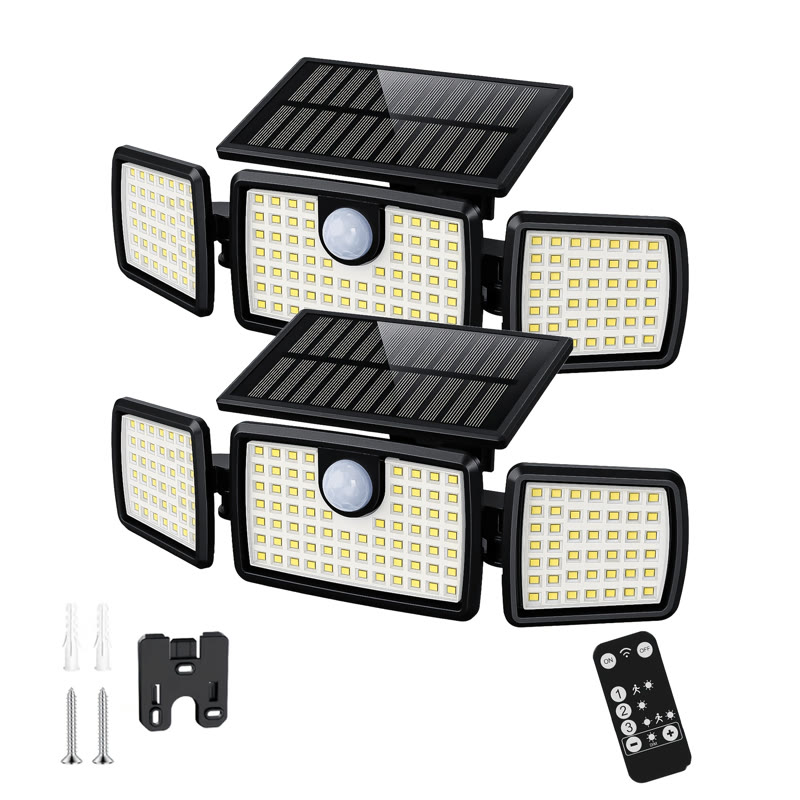
2-Pack 3-Head Solar Security Lights (3000LM, Motion Sensor)
You did the homework and got the car — now protect it. This 2-pack of solar security lights (3000LM, motion sensor) guards your driveway and the car in it for under $20 — no wiring, no electrician, no monthly cost.
$22.32 on Temu
See the solar lights on TemuAffiliate link: if you buy, this site may earn a commission at no extra cost to you. Price checked September 2026; Temu prices change often.

Recommended · Temu
1080P Video Doorbell Camera — Wireless, No Drilling
Your car sleeps in the apartment lot. This camera sticks on with no drilling, runs on a battery, and shows your front door — and who is near your car — right on your phone. 4.7 stars, 250K+ sold.
$9.98 on Temu
See the doorbell on TemuAffiliate link: if you buy, this site may earn a commission at no extra cost to you. Price checked September 2026; Temu prices change often.
Frequently asked questions
Can I actually get preapproved with bad credit?
Yes. Banks, credit unions, and other lenders issue preapprovals across the credit spectrum — the quote simply reflects your file: a rate, a term, and a maximum amount. At bad-credit scores, don't expect a pretty number: Experian's Q2 2026 averages put used-car APR at 19.10% for scores of 501 to 600 and 21.62% for scores of 300 to 500. Expect a real number. That's what makes it useful.
Do I have to buy an extended warranty or GAP insurance to get the loan?
No. The CFPB states these add-ons are optional — generally, you cannot be required to purchase an extended warranty, GAP insurance, or credit insurance to get an auto loan. If a dealer says one is required, ask him to show you where the sales contract says so. If you do want one, its price is negotiable, and the FTC notes you can usually buy the same kinds of products from independent sellers.
The dealer lowered my monthly payment. Isn't that a better deal?
Not necessarily. Per the CFPB, a lower monthly payment generally means a longer repayment period and more total interest paid — and a longer window owing more than the car is worth. Compare the total of payments on both offers, the figure federal law requires be disclosed in writing before you're legally obligated. The cheaper loan has the lower total, not the lower payment.
What happens if I show up without some of these documents?
Most likely, your approval stalls. Subprime approvals run on stipulations — the lender's list of required documents — and a missing pay stub or reference list means the deal waits until the paper shows up. Buyers get sent home for this, and some lose the car they picked while gathering paperwork. The folder takes an hour to assemble. Assemble it first.