How to Get a Car Loan After a Repossession
Quick answer: There is no legal waiting period after a repossession. Most subprime lenders want the repo about 12 months old — unless it was included in a bankruptcy — while buy here pay here lots finance right away, with trade-offs. A bigger down payment shortens every timeline. The repo itself reports for seven years from your first missed payment.

Recommended · Temu
6x4 Ft Brown Outdoor Storage Shed with Lockable Double Doors
Just bought the car? Clear the garage so it actually fits. This weatherproof steel shed has lockable double doors — and no monthly storage-unit bill.
$139.91 on Temu
See the shed on TemuAffiliate link: if you buy, this site may earn a commission at no extra cost to you. Price checked September 2026; Temu prices change often.
They took your car. Maybe from your driveway. Maybe from your job's parking lot, in front of everybody.
Here's the blunt truth: it feels like the end of ever owning a car again. It isn't. No law says you have to wait one day to finance another car after a repo. What you're facing isn't a wall — it's a clock and a checklist. Some doors open today. Some open in about a year. Your down payment decides how fast each one opens.
This is the honest map: which door to use, what lenders look at, what the old repo still costs you, and how to pick a first car that rebuilds you.
How soon can you actually get approved?
It depends on which of three doors you walk through.
Door one: buy here pay here — right now. These lots finance in-house. Many don't run a traditional credit check at all, so your repo — two days old or two years old — may not even enter the decision. They qualify you on income and down payment. The trade-offs are real: older cars, higher prices and rates, and — the big one — many lots don't report on-time payments to the credit bureaus, so a year of perfect payments may do nothing for your score. Ask about reporting before you sign.
Door two: a subprime lender — usually about 12 months. Regular dealers working with subprime lenders — the ones who specialize in bad credit — follow a working rule: most want the repo at least a year old. That's not a law. It's lender practice, and individual lenders vary. But it's the rule the big special-finance networks actually screen on, so plan around it.
Door three: bankruptcy changes the math. There's an exception to the 12-month rule: a repo that was included in a bankruptcy. Same with multiple repos: lenders usually won't touch a buyer with more than one repo showing — unless all of them were included in a bankruptcy. A discharged repo reads differently than an open one.
What will it cost? Expect to land where your score lands. A repo can knock 100 points or more off your score (Experian), and post-repo buyers typically sit in the lowest score bands. Experian's Q2 2026 report puts the average used-car APR at 21.62% for scores of 300 to 500, and 19.10% for scores of 501 to 600. Nobody publishes a special rate for people with a repo — those are the averages for scores in those ranges. That's why the car you pick matters more than the rate: a high rate on a cheap car is survivable. A high rate on an expensive car is how people get repo'd twice.
What do lenders look at besides the repo?
The repo starts the conversation. It doesn't end it. Subprime lenders judge you on stability — your income, your job, where you live, and how much money you bring:
- Time since the repo. The older it is, the less it weighs. Under 12 months is the hard zone for most subprime lenders, unless bankruptcy is in the picture.
- Your down payment. The standard subprime floor is $1,000 or 10% of the car's price, whichever is less — typical lender practice, not a law. After a repo, it's one of the main things that qualifies you — the strongest lever you control.
- Your income. Most subprime lenders typically want $1,500 to $2,500 a month in gross income — your pay before taxes — usually from one job, proven with a recent pay stub.
- Whether the payment fits your paycheck. Lenders typically cap your car payment plus insurance at about 15% to 20% of your gross pay, and your total debts, including the new payment, at about 45% to 50%. If the payment doesn't fit, the answer is no — no matter how much time has passed.
- Stability. Time at your job and at your address. Lenders look for a life that isn't moving every three months.
Notice what's not on that list: a perfect score. The question is simpler — do you look like you'll pay? Income, stability, and cash down answer yes.

Recommended · Temu
1080P Video Doorbell Camera — Wireless, No Drilling
Your car sleeps in the apartment lot. This camera sticks on with no drilling, runs on a battery, and shows your front door — and who is near your car — right on your phone. 4.7 stars, 250K+ sold.
$9.98 on Temu
See the doorbell on TemuAffiliate link: if you buy, this site may earn a commission at no extra cost to you. Price checked September 2026; Temu prices change often.
What is a deficiency balance — and does it block you?
Losing the car doesn't always end the loan. In the Consumer Financial Protection Bureau's terms: if your car is repossessed and sold, you may owe the difference between what was left on your loan — plus repossession fees — and what the car sold for. That difference is a deficiency balance. The CFPB's example: you owe $10,000, the car sells for $7,500, and you still owe $2,500 plus fees. The lender can collect it, hand it to a debt collector, or — in most states — sue you for it, as long as they followed the rules for the repo and the sale.
Two protections are worth knowing: the lender must sell the car in a commercially reasonable manner — they can't dump it for pennies to punish you — and if it sells for more than you owed, the surplus comes back to you.
Two other words you'll hear: reinstatement and redemption. In some states, the law lets you reinstate — catch up the past-due amount plus the lender's repossession costs and resume the loan. Redemption means buying the car back before it's sold by paying the full amount you owe — the whole remaining debt, not just what you're behind. Both are state-by-state, with no national deadline, so check your own state's law. And handing the keys over voluntarily changes nothing: a voluntary surrender leaves you owing the exact same deficiency.
So does a deficiency block your next loan? Honest answer: no law and no published lender rule we've found says you must pay it off first. What is documented is the bankruptcy exception above — lenders treat a repo that went through bankruptcy better than an open one. The deficiency is still a real, collectible debt. It just isn't a legal lock on your next car.
How long does the repo haunt your credit?
Seven years. But here's the part almost everybody gets wrong:
The seven years do not start when they take the car. They start from the first missed payment that led to the repo — the first payment you missed and never caught up on. Experian's example: you miss your first payment in July 2026, and the car is repossessed in November 2026. The account comes off your report in July 2033 — not November 2033. The clock started the day the trouble did. A collection account for the deficiency runs on that same clock.
What rebuilds while you wait:
- Time itself. A four-year-old repo hurts less than a four-month-old one.
- A new loan that reports. If your next lender reports your payments, every on-time payment puts fresh good history on top of the old bad mark. This is why the reporting question matters so much at a buy here pay here lot.
- The rest of your file. Other bills paid on time, balances kept low — none of it erases the repo, but all of it changes the story around it.
The repo falls off on its own schedule. Your job is to make sure the newest entries on your file are the good ones.

Recommended · Temu
2-Pack 3-Head Solar Security Lights (3000LM, Motion Sensor)
Your car sits outside overnight — apartment lot, driveway, or street. This 2-pack of solar security lights (3000LM, motion sensor) keeps it lit and watched — no wiring, no electrician, no monthly cost.
$22.32 on Temu
See the solar lights on TemuAffiliate link: if you buy, this site may earn a commission at no extra cost to you. Price checked September 2026; Temu prices change often.
What's the smartest first car after a repo?
The cheapest reliable car that fits the payment rules — bought on purpose, as a stepping stone.
Run it through the 10% rule: on a $5,000 car, the typical subprime down payment floor is $500. On a $7,000 car, it's $700. A cheap car keeps the down payment reachable, the payment inside the 15–20% window, and the interest survivable even at a deep subprime rate. This is not your forever car. It's your proof-of-payment car.
Three rules for picking it:
- Cheap and boring beats nice and financed to the edge. A plain sedan with a payment you can make in a bad month.
- Make sure the payments get reported. A rebuilding loan that nobody reports is a wasted year. Subprime lenders at regular dealers report as a normal part of their business. At a buy here pay here lot, ask — and get the answer in writing.
- Pay it like it's your job, then refinance. A common path: after 6 to 12 months of on-time payments, many buyers refinance into a better rate as their score climbs. The first rate is the price of re-entry — not the price you pay for five years.
Want to see the price range a lender would likely work with on your income? Run your numbers through the approval calculator on this site.
The repo took your car. It did not take your right to buy another one. The clock is already running — it started with that first missed payment. Bring income, bring cash down, pick the cheap car, and make every payment count where it shows.
Sources: Consumer Financial Protection Bureau (CFPB), "What happens if my car is repossessed?"; Federal Trade Commission (FTC), "Vehicle Repossession"; Experian, "How Long Does a Repossession Stay on Your Credit Report?" and State of the Automotive Finance Market, Q2 2026. Waiting periods, down payment minimums, income floors, and payment-to-income figures reflect typical subprime lender practice (CarsDirect, Auto Credit Express); individual lenders vary, and none is a legal requirement.
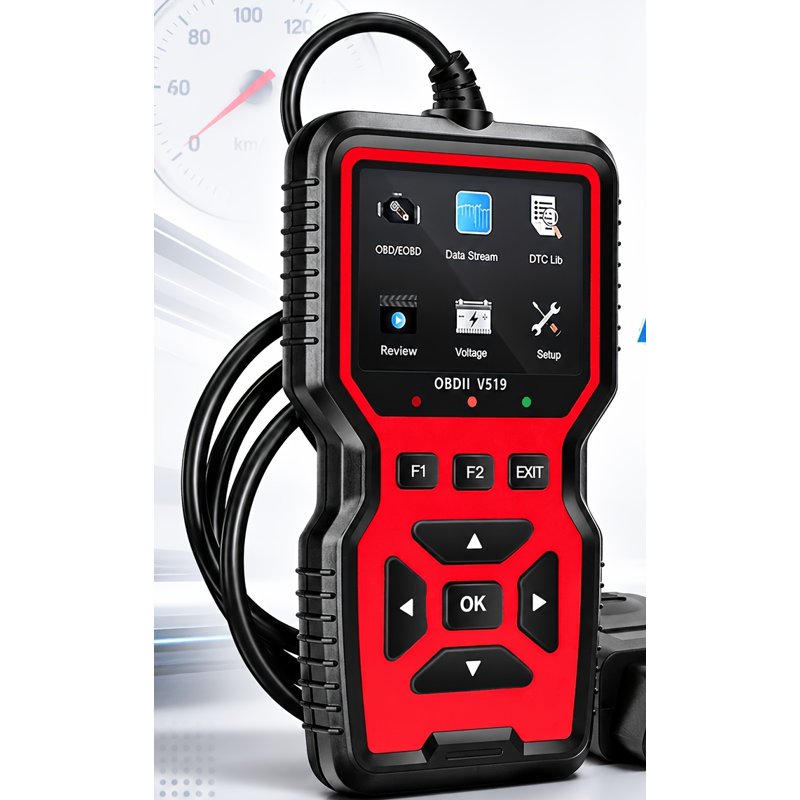
Recommended · Temu
V519 OBD2 Scanner — Check Engine Code Reader
Your first car after a repo has to be a good one. This OBD2 scanner reads the fault codes yourself — including the ones a seller cleared yesterday to hide a problem.
$13.96 on Temu
See the OBD2 scanner on TemuAffiliate link: if you buy, this site may earn a commission at no extra cost to you. Price checked September 2026; Temu prices change often.

Recommended · Temu
21V Cordless Drill Kit — Full Tool Set in a Case
Every repair you do yourself is a payment you don't finance. This 21V drill kit comes with the bits and hand tools to start — brakes, batteries, and the small stuff. 4.7 stars, 49K+ sold.
$11.97 on Temu
See the drill kit on TemuAffiliate link: if you buy, this site may earn a commission at no extra cost to you. Price checked September 2026; Temu prices change often.
Frequently asked questions
Is there a legal waiting period after a repossession?
No. No federal or state law bars you from financing a car after a repo. The roughly 12-month wait is subprime lender practice — most want the repo at least a year old, unless it was included in a bankruptcy. Buy here pay here lots, which finance in-house, often have no wait at all.
Can I get a car loan with two repossessions?
It's harder. Subprime lenders usually won't approve a buyer with multiple repos showing — unless all of them were included in a bankruptcy. Outside that exception, time and a strong down payment are your main tools, and buy here pay here may be the realistic first step.
Do I have to pay off the deficiency balance before I can get another car loan?
No rule we've found requires it. The deficiency is still a real debt — the lender can collect it, and in most states can sue for it — but paying it off is not a precondition for approval. What lenders treat differently is a repo included in a bankruptcy, which escapes the usual 12-month and multiple-repo rules.
Will my new car loan rebuild my credit after a repo?
Only if the payments are reported. Subprime lenders at regular dealers report loans as a normal part of their business. Buy here pay here lots may report only late payments — or nothing at all — which is why you ask about reporting before you sign.