How to Buy a Car with No Credit History
Quick answer: No credit is not bad credit. A blank file scares nobody — lenders and credit unions run first-time-buyer programs built for exactly you. What replaces a score: a steady job, provable income, and a real down payment. A cosigner or a six-month runway are the backups.
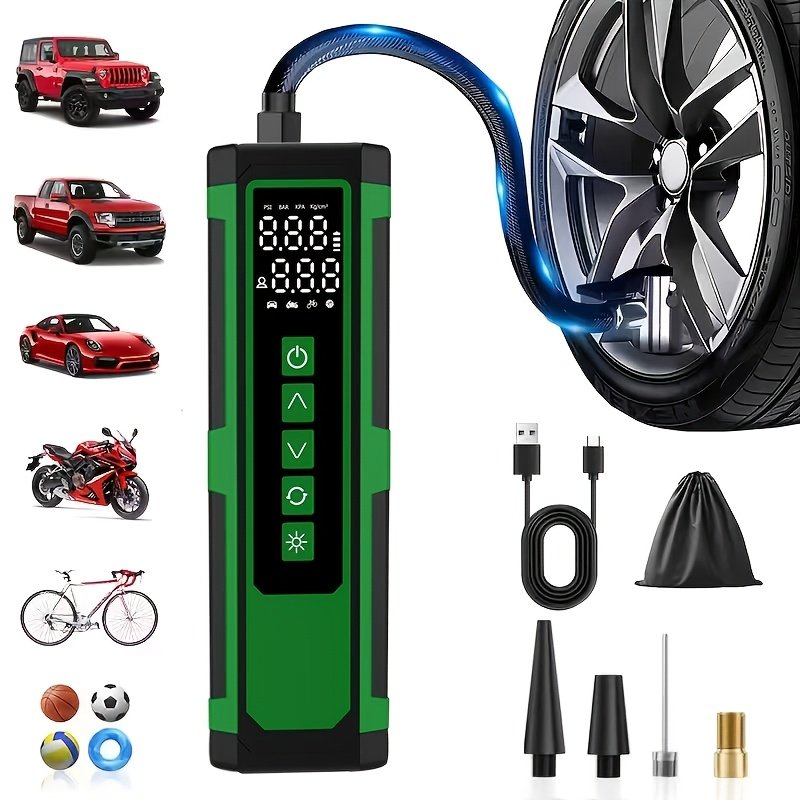
Recommended · Temu
Portable Tire Inflator — Cordless Air Pump (150 PSI)
A flat tire on the way to work can cost you the job that pays for the car. This cordless inflator rides in the trunk and fills a tire in minutes — no gas-station air pump, no tow truck. 4.8 stars, 35K+ sold.
$7.45 on Temu
See the inflator on TemuAffiliate link: if you buy, this site may earn a commission at no extra cost to you. Price checked September 2026; Temu prices change often.
You've never had a credit card. Never had a loan. You paid cash for everything, like you were taught.
Now you need a car, and the first dealer who runs your credit acts like that makes you a criminal. No history. No score. Denied.
Here's the blunt truth nobody tells you: no credit is not bad credit. Bad credit is a record of promises broken — late payments, charge-offs, a repo. No credit is a blank page. Nothing on it is good, but nothing on it is bad either. And lenders know the difference: some of their first-time-buyer programs will take a blank file and flat-out refuse a damaged one.
You are not starting from behind. You're starting from zero — and zero beats negative.
Is no credit worse than bad credit?
Short answer: no. It's better — and it isn't close.
Get the words straight, because dealers blur them on purpose:
- No credit means you don't have enough history to generate a score at all. Experian calls people in this spot "credit invisible." When a lender pulls your file, no score comes back. Not a low score — no score.
- A thin file means a report exists but barely: one or two accounts (some lenders say fewer than five), and it may or may not produce a score.
- Bad credit means the file exists and it's full of damage. On the FICO scale, Experian notes, a score of 579 or below is classified "poor."
Here's the part that matters. A score isn't a zero that you failed up from. It doesn't exist until there's something to measure. FICO's own rule, from myFICO: a FICO Score requires at least one account that's been open six months or more, and at least one account reported to the bureau in the past six months. VantageScore works faster — it can score a file with as little as one month of history, per Experian and Capital One. But until an account exists and reports, there's nothing to score.
Experian's judgment is blunt: no credit is better than bad credit, because a lack of history can be fixed in a matter of months, while bad credit can take years to rebuild.
Who lends to first-time buyers?
Short answer: manufacturers and credit unions run programs built for blank files — and several of them disqualify bad credit outright.
This is the fact that changes everything. First-time-buyer programs are designed for people with no credit — not bad credit. Multiple credit-union programs state it in their terms: the file must be free of derogatory items — no collections, no charge-offs, no repos — or you're out. Your blank page passes automatically. The buyer with a 540 score and two collections doesn't.
Real, published examples of how the category works:
- Chevrolet / GM Financial's First-Time Buyer Program states that first-time buyers with no adverse credit history may finance up to 105% of the vehicle's MSRP. Note the qualifier: no adverse history. It's a no-history program, not a bad-credit program.
- Credit unions are where most of these programs live, and their terms show the pattern. One Oregon program asks for a year with the same employer, 5% or more down, and total debts — including the new payment — under 40% of income. A New York program asks for six months of consistent income, 10% down, debts at 35% or less. A Pennsylvania program advertises no cosigner and no previous credit history required, $1,000 minimum down — and a report free of derogatory information. A Florida program requires no credit history at all, bars anyone with outstanding collections or a repo, and asks for just two months with your current employer.
Look at what's not on any of those lists: a credit score. What replaces it, every time: verifiable income, some job stability, money down, and total debts held to roughly 35–40% of income. Those are individual lenders' published terms, dated November 2026, and they change — examples of how the category works, not a nationwide promise. But the category is real, and it was built for you.

Recommended · Temu
Solar & USB LED Lantern — COB Work Light
When the power goes out, this is your light. It charges from the sun or any USB port — no candles, no wiring, nothing to install. 4.7 stars, 100K+ sold.
$4.94 on Temu
See the lantern on TemuAffiliate link: if you buy, this site may earn a commission at no extra cost to you. Price checked September 2026; Temu prices change often.
What do you bring instead of a score?
Short answer: a stack of paper that proves the three things a score normally proves — you earn, you're stable, you're serious.
A credit score is just a shortcut — one number that says you earn, you stay put, and you pay what you owe. With no score, you prove each one the long way:
- Proof of income. Recent pay stubs showing year-to-date earnings. Subprime and first-time lenders typically look for $1,500 to $2,500 a month in gross income — pay before taxes — generally from a single source.
- Proof of job time. The programs above ask for anywhere from two months to a year with the same employer. Longer is stronger — if you just started, a few months of stubs may be worth more than applying today.
- Proof of residence. A utility bill or lease in your name at your address.
- A real down payment. The standard subprime floor is typically $1,000 or 10% of the car's price, whichever is less — and first-time programs commonly ask 5–10% or more. Cash, trade-in value, or a mix. This is the lever you control completely: every extra dollar down is a dollar the lender doesn't have to trust you for.
- The basics: driver's license, proof of insurance, references if they ask.
Walk in with that folder and you're not begging for an exception — you're handing the lender everything its program was designed to underwrite. (No Social Security number? Some credit unions — including those with the Juntos Avanzamos designation for serving immigrant members — lend to ITIN holders; this site's city guides cover that road.)
See what your income and down payment can carry before you visit a lot: run the approval calculator on this site.
What will it cost?
Short answer: more than a prime rate, less than you fear — and the honest answer is that nobody can quote you a tier, because you aren't in one.
Experian's State of the Automotive Finance Market report for Q2 2026 prices used-car loans by score range: near-prime buyers (601–660) averaged 13.93%, subprime (501–600) averaged 19.10%. Notice who's missing from that table: you. A buyer with no score doesn't appear in the tier averages at all, because lenders don't price him off a score — they price him off the substitutes: income, job time, down payment, and how much car he's asking for.
So what do blank-file buyers actually pay? Published first-time programs give the honest range: one credit union posts a dedicated first-time-buyer line at 12.32% APR up to 60 months (13.85% beyond that); another advertises rates as low as 5.99%; a third, as low as 14.24%. Dated examples, not promises — but they bracket the truth: a strong file with no score can land closer to near-prime pricing than to the 19–21% deep-subprime floor that scares people.
Two things move your number most: the down payment (borrow less, and the lender's risk — and your rate — drop) and the size of the ask. A modest used car with 10% down and a payment under 15–20% of your gross income is an easy file to approve; a big loan at the minimum down is where blank-file buyers get priced like risks. Buy the right-sized car now, and the loan becomes your first tradeline — six months of on-time payments later, you have a score, and the next negotiation starts from strength.
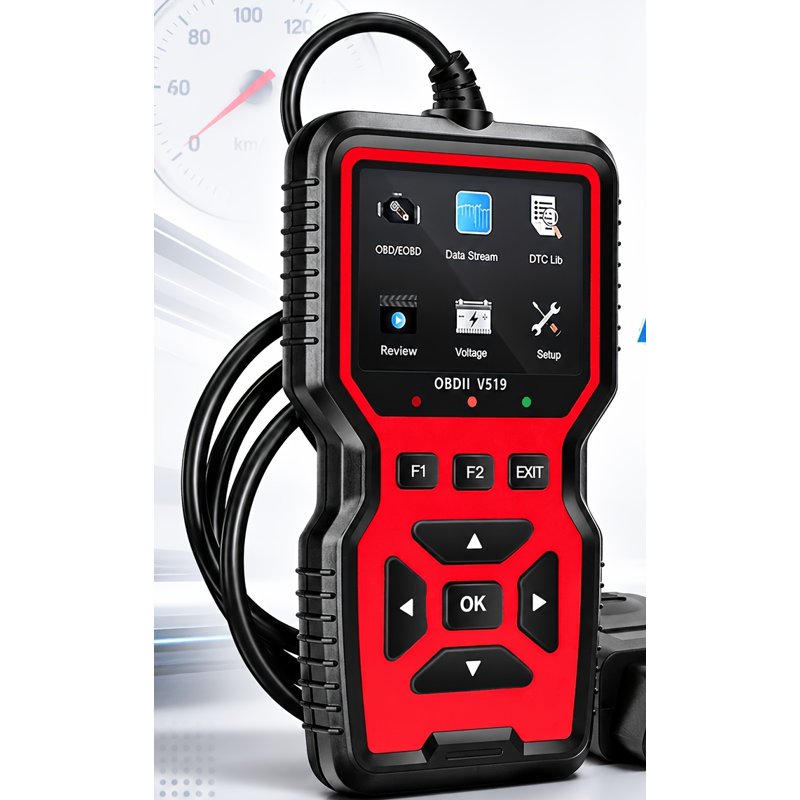
Recommended · Temu
V519 OBD2 Scanner — Check Engine Code Reader
Before you sign for that used car, plug this in under the dash and read the codes yourself. It shows check-engine codes and live data — the stuff a seller hopes you never check. 4.6 stars, 28K+ sold on Temu.
$13.96 on Temu
See the scanner on TemuAffiliate link: if you buy, this site may earn a commission at no extra cost to you. Price checked September 2026; Temu prices change often.
What if you get denied anyway?
Short answer: you have two backups — borrow someone's history, or build a little of your own. Both work. Neither takes years.
Backup one: a cosigner. A cosigner lends you their track record. Per Experian, a cosigner typically needs a good score — usually 670 or higher — sufficient income, and a debt-to-income ratio under 50%. The lender checks their file alongside yours. If you're approved, the loan reports to both credit files: your on-time payments build your history and theirs. Be straight about the flip side — the cosigner is legally responsible for the debt if you don't pay, late fees included; a missed payment damages both files; and a cosigner gets no ownership rights to the car (that's a co-borrower, who co-owns it). A cosigned loan is a serious favor. Treat it like one: pay early, every month.
Backup two: the six-month runway. If the car can wait — say you're buying in spring, not this week — the Consumer Financial Protection Bureau's own starter tools build a file from nothing:
- A secured credit card. You put down a deposit — the CFPB puts typical deposits at $50 to $300 — and the bank gives you a credit line matching it. Use it lightly, pay in full, and the payments report to the bureaus.
- A credit-builder loan. From a bank or credit union, typically $300 to $1,000. The money sits in a locked savings account while you pay it off in small payments over six to 24 months — then you get the money. Every payment reports.
Two warnings from the CFPB. First: ask whether the product reports to the credit bureaus — an unreported card builds nothing. Second: a debit card, a prepaid card, and cash build no credit at all, however responsibly you use them. That's the trap a lifetime of paying cash sets for you.
Now the runway math. Open one today and keep it current: VantageScore can score you in about a month, and a FICO Score — which needs an account open six months with recent reported activity — exists at roughly the six-month mark. That's the whole fix. Bad credit takes years to outrun. You just need months — there's nothing on your page to erase.
No credit vs. bad credit: the side-by-side
| No credit | Bad credit | |
|---|---|---|
| What it means | No file, or too little history to score — the lender gets no number back | A file full of negative marks; FICO 579 or below is "poor" |
| Who lends | First-time-buyer programs at manufacturers and credit unions, built for blank files | Subprime lenders and buy here pay here lots |
| What it costs | Priced on income, job time, and down payment; published first-time program rates run from about 6% to about 14% (Nov 2026 examples) | Tier averages: 19.10% used APR at scores 501–600, 21.62% at 300–500 (Experian Q2 2026) |
| How long to fix | Months — a first score in about six months of reported payments | Years of rebuilding while old damage ages off |
Sources: Experian — "Is No Credit Better Than Bad Credit?", "What Is a Thin Credit File?", and cosigner guidance (typical cosigner score 670+, debt-to-income under 50%). myFICO — minimum requirements for a FICO Score. Capital One and Experian on VantageScore minimums (about one month of history). Consumer Financial Protection Bureau — secured cards (deposits commonly $50–$300), credit-builder loans (typically $300–$1,000 over 6–24 months), and guidance that debit, prepaid, and cash use does not build credit. Chevrolet / GM Financial First-Time Buyer Program (manufacturer page). Credit-union first-time-buyer program terms as published by individual credit unions; rates are dated examples (November 2026) and change. Experian, State of the Automotive Finance Market, Q2 2026 (APR averages by score). Down-payment and income floors reflect typical lender practice as reported by CarsDirect and Auto Credit Express; lenders vary.
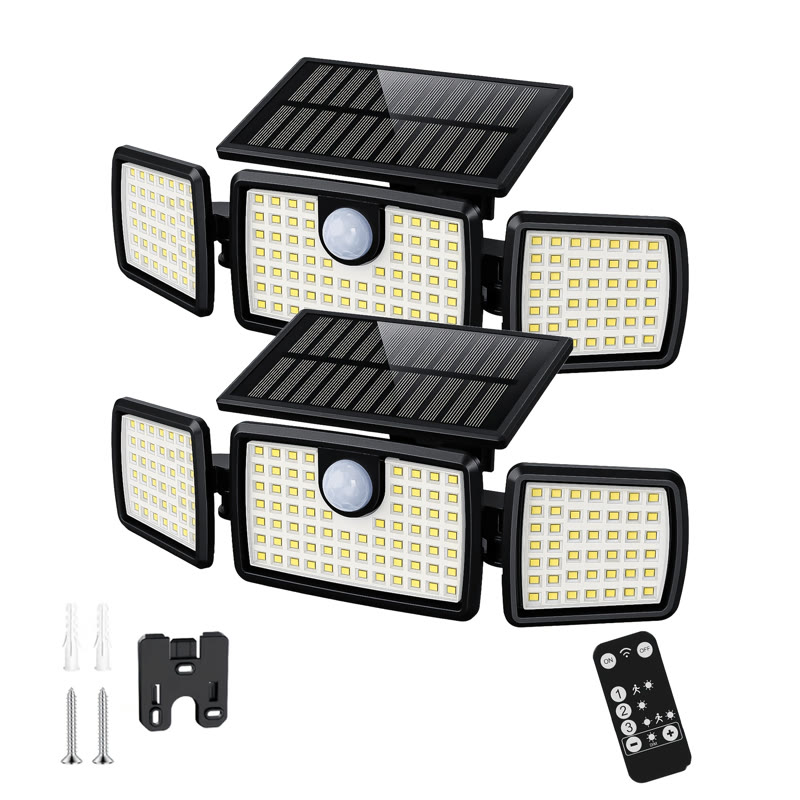
Recommended · Temu
2-Pack 3-Head Solar Security Lights (3000LM, Motion Sensor)
Your first car deserves protection from day one. This 2-pack of solar security lights (3000LM, motion sensor) watches your driveway and the car in it for under $20 — no wiring, no electrician, no monthly cost.
$22.32 on Temu
See the solar lights on TemuAffiliate link: if you buy, this site may earn a commission at no extra cost to you. Price checked September 2026; Temu prices change often.
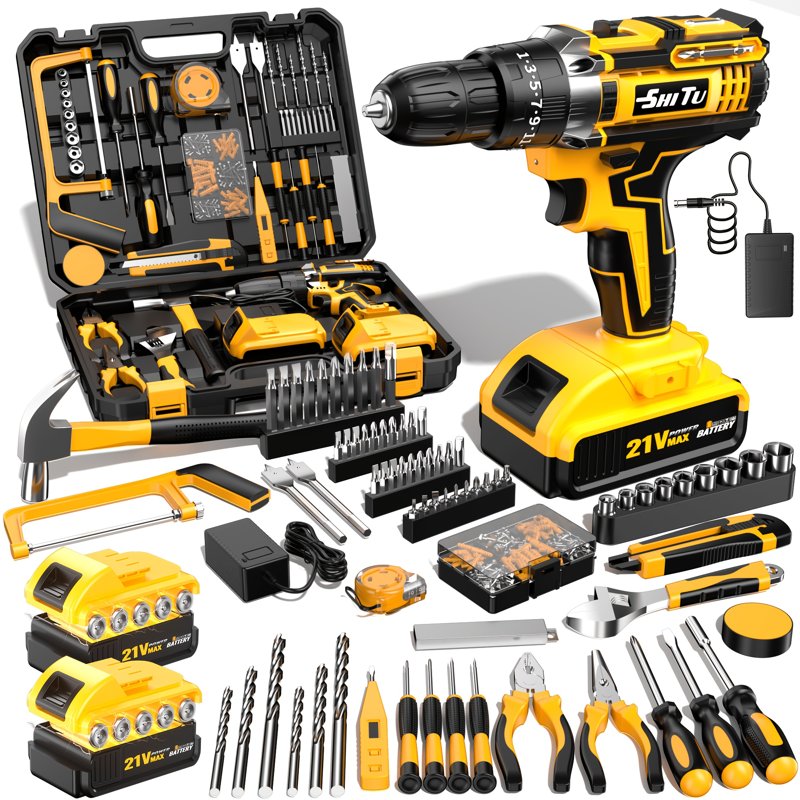
Recommended · Temu
21V Cordless Drill Kit — Full Tool Set in a Case
Every repair you do yourself is a payment you don't finance. This 21V drill kit comes with the bits and hand tools to start — brakes, batteries, and the small stuff. 4.7 stars, 49K+ sold.
$11.97 on Temu
See the drill kit on TemuAffiliate link: if you buy, this site may earn a commission at no extra cost to you. Price checked September 2026; Temu prices change often.
Frequently asked questions
Can I buy a car with no credit and no cosigner?
Yes — that's exactly who first-time-buyer programs are built for. At least one credit union's program advertises no cosigner and no previous credit history required, and Chevrolet's program through GM Financial is written for buyers with no adverse history. What you need instead: provable income, some time on the job, and a down payment, commonly 5–10% or more.
How much down payment do I need with no credit history?
Plan on at least the standard floor — typically $1,000 or 10% of the car's price, whichever is less. Published first-time programs commonly ask 5% to 10% down, sometimes with a $1,000 minimum. More down strengthens a blank file more than almost anything else you can bring.
How long does it take to build enough credit to buy a car?
Start from zero with a secured card or credit-builder loan that reports to the bureaus, and a VantageScore can appear in about a month and a FICO Score at roughly six months, once an account has been open six months and is reporting. But you may not need to wait — the first-time programs above exist so you don't have to.