Can You Finance a Car with a Salvage or Rebuilt Title?
Quick answer: Almost never on a salvage title, and only with legwork on a rebuilt one. As a rule, banks, credit unions, and even high-risk lenders will not finance cars with branded titles. The opening for a rebuilt title is a smaller bank, a credit union, a subprime lender, or a personal loan — or cash.
Recommended · Temu
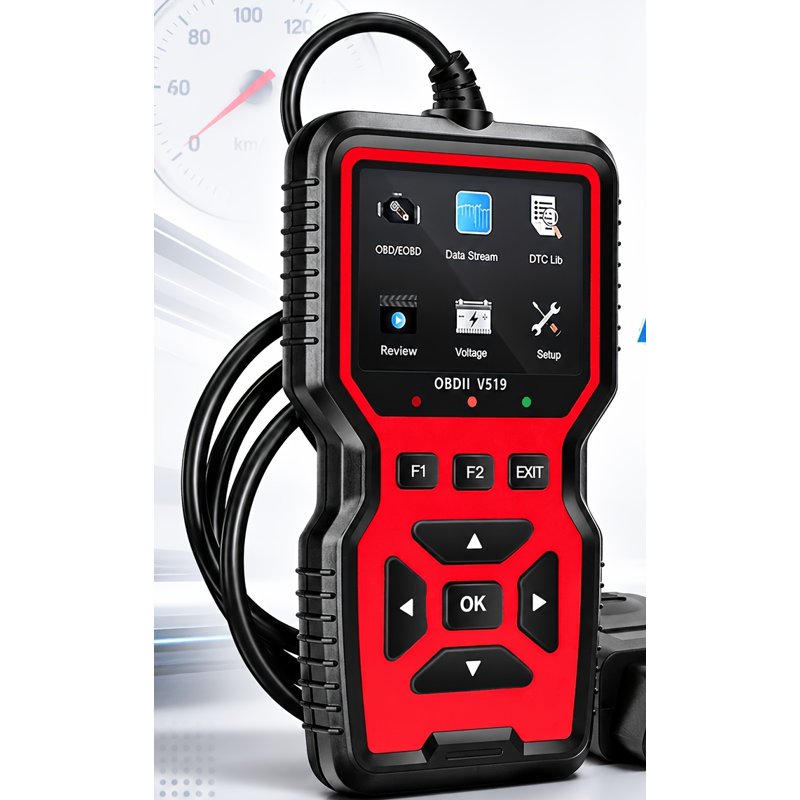
V519 OBD2 Scanner — Check Engine Code Reader
Before you sign for that used car, plug this in under the dash and read the codes yourself. It shows check-engine codes and live data — the stuff a seller hopes you never check. 4.6 stars, 28K+ sold on Temu.
$13.58 on Temu
See the scanner on TemuAffiliate link: if you buy, this site may earn a commission at no extra cost to you. Price checked September 2026; Temu prices change often.
The car is thousands cheaper than every other car like it. Same year, same miles, same color — and a price that looks like a typo. For a buyer with bad credit, a rebuilt-title car looks like the side door into owning something decent: the discount does the work your credit score can't.
Here's the blunt truth: it isn't a financing shortcut. The discount is real — Kelley Blue Book's rule of thumb is 20% to 40% off. But the two publishers who cover bad-credit car lending for a living, CarsDirect and Auto Credit Express, do not present rebuilt titles as a workaround for bad credit. They present them as a cash buyer's gamble. A branded title makes every gate you already face — the loan, the insurance, the day you try to sell the car — harder, not easier.
That doesn't make the car an automatic no. It makes it a deal you have to walk through in the right order, with your eyes open. This page walks the three gates in the order you'll hit them, shows you the one narrow profile where a rebuilt car is honestly a fair deal, and names the checks that separate a real discount from an expensive mistake.
What do "salvage" and "rebuilt" actually mean?
Short answer: a brand is a permanent warning label the state puts on a car's title after an insurance company declares the car a total loss. "Salvage" means totaled and not yet fixed. "Rebuilt" means the same car after repairs and a state inspection. The label never comes off.
Start with who does what, because most explanations skip it. The insurance company declares the total loss. The state puts the brand on the title — the Bureau of Justice Assistance, which runs the federal title database, defines a brand as a descriptive label states assign to a vehicle, like "salvage" or "flood." From then on, the brand follows the car's VIN in that federal system, the National Motor Vehicle Title Information System — NMVTIS for short. A seller can lose paperwork. The federal record doesn't lose the brand.
A salvage title means the car was damaged badly enough that the insurer called it a total loss. CarsDirect puts the consequence plainly: a salvaged vehicle can't be driven or registered in anyone's name. Experian adds that it's illegal to drive a salvage-title car on public roads unless it is repaired and passes a state safety inspection. A salvage car is not cheap transportation. It's a project that isn't legally a car yet.
A rebuilt title — also called reconstructed or repaired — is what the same car carries after it's been repaired and passed the state's inspection process. CarsDirect counts the journey: clean, then salvage, then rebuilt — at least three title changes. The car can now be registered, driven, and insured. What does not change is the brand itself. Texas prints "Rebuilt Salvage" on the title permanently, and Kelley Blue Book calls the value effect of a clouded title permanent. There is no process, in any state we could source, that turns a branded car back into a clean-title car.
Two more things vary by state, and any site that flattens them is guessing. The name varies: Texas says "Rebuilt Salvage," California says "Revived Salvage," Florida says "Rebuilt" — and Auto Credit Express notes that some states don't issue a rebuilt title at all, so a repaired car there can still carry a salvage title after inspection. And the trigger varies: Experian and Auto Credit Express both put the typical total-loss threshold at repair costs of roughly 60% to 100% of the car's value, set by state law. There is no single national percentage — the three state examples further down this page use three different tests.
| Clean title | Salvage title | Rebuilt title | |
|---|---|---|---|
| Can you finance it? | Yes — the normal lender doors are open | No — lenders will not finance a car that still carries a salvage title | Rarely — a smaller bank, a credit union, a subprime lender, or a personal loan, and expect legwork |
| Can you insure it? | Yes, including full coverage | No — you can't get insurance on a salvage-title car | Liability and state-required coverage typically; comprehensive and collision depend on the insurer |
| What is it worth? | Full market value | Up to 50% less than the same car with a clean title (Experian) — before repair costs come out of your pocket | 20% to 40% less than the same car with a clean title (Kelley Blue Book's rule of thumb) |
| Can you drive it legally? | Yes | No — not until it is repaired and passes your state's rebuilt process | Yes — once the state's inspection and paperwork are done |
Can you finance a salvage or rebuilt title car?
Short answer: a salvage title, no — full stop. A rebuilt title, rarely, and only through a short list of lender types, with real legwork. For most buyers, the honest answer from both industry publishers is the same word: cash.
Auto Credit Express states the rule without decoration: "As a rule, banks, credit unions, and even lenders that offer only high-risk car loans will not finance cars with these types of titles." Its follow-up is just as blunt: "If you've got your heart set on a branded title car, keep in mind that you may end up having to pay cash for it." CarsDirect's used-car deal-breaker list leads with the title for the same reason — many lenders don't finance cars with branded titles, and it says so in the sentence bad-credit buyers need to hear: "Many lenders don't finance cars unless they have a clean title, and this includes bad credit auto lenders (subprime lenders), too."
Why is the wall that high? CarsDirect explains the lender's math. If the vehicle breaks down, there's a higher likelihood the borrower defaults on the loan. And if the car is repossessed and sold at auction to cover the balance, the auction proceeds may not be enough to pay the entire balance — leaving a deficiency balance the lender has to chase. A branded car is weak collateral twice over: more likely to break, worth less if seized. That's the whole wall, and it applies before anyone looks at your credit.
The salvage stage is a flat no for a simpler reason. A car that cannot legally be driven, registered, or insured is not collateral a lender can use. Auto Credit Express: "Lenders won't finance a salvage title." Financing only enters the picture after the car is repaired, inspected, and carrying a rebuilt title.
The rebuilt stage has a narrow opening, and Auto Credit Express names lender types — never specific companies: "In general, large banks will not offer financing for branded car titles. If you need financing for a salvage title, a smaller bank, a credit union, or a subprime lender could be your best bet." On credit unions it adds that they can be a great option especially if you're a member in good standing, because they're often more flexible and focused on their members. Its bottom-line answer: "Lenders will not finance a salvage title car. If a car has a rebuilt title, you'll most likely get financing from a credit union, subprime lender, or a personal loan." A personal loan is the odd door in that list — it's unsecured, meaning the lender judges you, not the car, and doesn't use the car as collateral. Experian and Auto Credit Express both note the trade: higher rates because it's unsecured, and it might not cover the full amount of the car or the repairs.
If you find a lender willing to look at a rebuilt-title application, Auto Credit Express lists what they look for: the title status itself — rebuilt, not salvage; a mechanic's statement documenting that the car was professionally rehabilitated and passed its safety inspections; proof of insurance, with the specifics of the coverage, which is often required; and your credit score — "if you have strong credit, it could improve your approval chances." Receipts and records from the rebuild, inspection reports, and the title documents all help. Notice the order hidden in that list: the lender wants proof the car is insurable before it lends. That's the next gate, and it's where a lot of these deals quietly die.
One last reality about where these cars even live. Auto Credit Express: "Typically, franchised dealerships won't buy or sell vehicles with branded titles" — most branded cars are sold by private sellers or smaller used car lots. CarsDirect goes further: "Most dealerships don't even allow rebuilt vehicles on their lot!" So the shopping itself happens in the least protected corner of the market, with no franchise dealer standing behind the car.
Recommended · Temu
6x4 Ft Brown Outdoor Storage Shed with Lockable Double Doors
Just bought the car? Clear the garage so it actually fits. This weatherproof steel shed has lockable double doors — and no monthly storage-unit bill.
$137.21 on Temu
See the shed on TemuAffiliate link: if you buy, this site may earn a commission at no extra cost to you. Price checked September 2026; Temu prices change often.
The insurance gate: solve it before the loan
Short answer: there is no insurance at all for a car that still carries a salvage title. On a rebuilt title, liability coverage is typically available — but the full coverage a lender usually demands may not be, and that mismatch kills deals. Line up insurance first, loan second.
Progressive, in its own published guidance, is as plain as it gets: "No, you can't get insurance for salvage cars." Once the car is repaired and carries a rebuilt title, the picture opens — partway. "If your insurance company accepts rebuilt title vehicles, then you can typically get liability coverage as well as any other coverages your state requires." But: "Depending on the insurer, you may or may not be able to get comprehensive car insurance coverage or auto collision coverage on your rebuilt title vehicle." The reason is practical, not personal: a rebuilt car may still carry damage from the crash that totaled it, "making it difficult to tell the difference between old and new damage." An insurer that can't tell which dent it's paying for may simply refuse to sell the coverage. Experian's version agrees: some insurers will only offer your state's minimum required coverage, and full coverage is harder to obtain because insurers struggle to separate preexisting damage from new claims.
Now chain the two gates together, because this is the trap. A lender financing a car typically requires full coverage on it — and Auto Credit Express lists proof of insurance, with the coverage specifics, as part of a branded-title loan application. If the lender requires collision and comprehensive, and every insurer you call will write liability only, the deal dies from both ends at once. Texas's DMV prints the warning for its own buyers: "Often rebuilt vehicles are denied insurance. Check with your insurance agent before purchasing the vehicle." Before. Not after you've won the auction or signed the bill of sale.
Price is the smaller problem, and even it leans the wrong way. Progressive says a rebuilt vehicle may cost more to insure, because insurers may view them as more likely to be involved in an accident. Experian estimates a rebuilt-title car could cost up to 20% more to insure — that's one publisher's estimate, not a market average, but the direction from both sources is the same: the discount on the car does not come with a discount on the insurance.
What about buy here pay here lots?
Short answer: no outside lender sits between a buy here pay here lot and its deals, so the clean-title rule doesn't reach the lot automatically. But no publisher we could find states a buy here pay here policy on branded titles — so whether a given lot will sell and finance a rebuilt car is that lot's own call. Ask before you shop, and get the title brand in writing.
Here's the structure, labeled honestly as structure — not a policy we can cite. Buy here pay here means the dealer is the seller and the lender in one: the Consumer Financial Protection Bureau describes these dealers as selling the car as well as originating and servicing the loan themselves. The clean-title wall in the sections above is an outside lender's rule. At a buy here pay here lot there is no outside lender, so no outside rule decides which cars the lot can finance — the lot sets its own vehicle and approval criteria. And the cars are physically there: Auto Credit Express notes branded-title cars are sold by smaller used car lots, which is the same independent-lot world buy here pay here lives in.
What we will not do is turn that structure into a promise. No CarsDirect or Auto Credit Express page publishes a buy here pay here branded-title policy in either direction, and any site that tells you "buy here pay here lots will finance your salvage car" — or the opposite — as a flat fact is inventing it. What you can do is use the comparison on this site to understand how buy here pay here differs from a subprime bank loan, then ask the specific lot, about the specific car, before you spend a dollar: Will you finance this rebuilt-title car? What does the title say, in writing? A lot that won't put the brand in writing has answered you.
Recommended · Temu
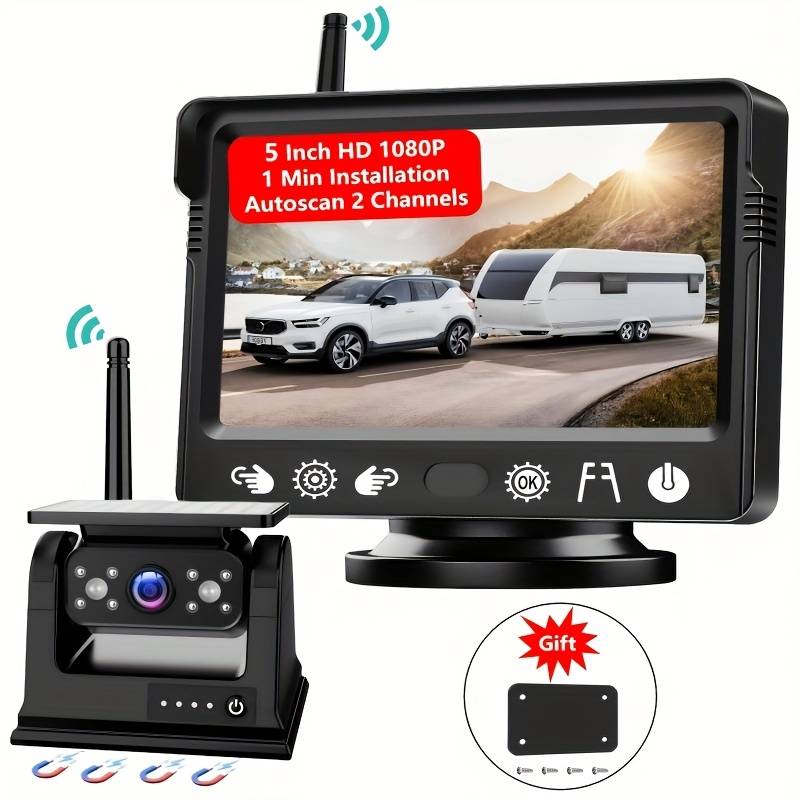
Magnetic Solar Backup Camera — 5-Inch Monitor, No Wiring
Backup cameras did not become standard until 2018, so older cars never got one. This camera sticks on with a magnet, charges itself in the sun, and shows the picture on its own monitor — about a minute to install, no wiring at all.
$100.69 on Temu
See the backup camera on TemuAffiliate link: if you buy, this site may earn a commission at no extra cost to you. Price checked September 2026; Temu prices change often.
Can you refinance your way out of the loan later?
Short answer: no. This is the part that changes the whole decision, so hear it plainly — the refinance door that rescues a lot of bad-credit buyers is closed on a branded-title car.
The standard play on this site is: take the expensive loan you can get today, pay on time for 6 to 12 months, then refinance into something cheaper. That play requires a lender willing to refinance the car — and CarsDirect's refinancing requirements include this line: "Ensure your car has a clean title." A branded title — salvage or rebuilt — fails that requirement. The same guidance notes lenders generally don't refinance older, high-mileage cars either, which describes most rebuilt-title cars twice over.
So judge any rebuilt-title loan as the loan you will keep for its entire life, because that's almost certainly what it is. If the rate is ugly and the term is long, there is no 6-to-12-month refinance waiting to fix it. A clean-title car bought with an expensive loan has an exit. A branded-title car usually doesn't. That difference belongs in the price math before you buy, not after.
What does bad credit change — and what does money down change?
Short answer: less than you'd expect, because the title attacks the car's eligibility before your file is ever judged. The primary effect of a branded title is refusal, not a worse price — and no lender publishes branded-title terms of any kind.
Think of it as two separate risk flags that stack. Your credit is one flag. The title is the other. The title can disqualify the car at lenders who would have approved you; your credit can disqualify you at the small pool of lenders willing to touch the car. Auto Credit Express lists credit score among the factors on a branded-title application — strong credit "could improve your approval chances since lenders will view you as a less risky borrower." Bad credit doesn't get a special branded-title rule. It just removes the one advantage that could have argued against the title.
On price, exactly one priority source states a direction, and it states no numbers. Experian: "If you do find a lender, you may face a higher interest rate or be required to put more money down." That is the entire sourced story — a direction, from one publisher, unquantified and not specific to bad credit. No lender publishes a down-payment percentage, a rate premium, a maximum term, a loan-to-value cap, or a credit-score minimum for branded-title loans. If a website quotes you one — "20% down required on rebuilt titles," "expect rates 5 points higher" — it was invented. Walk away from advice that precise about numbers nobody publishes.
Your side of the file still works the normal way. Income has to be provable in the normal ways — tax returns if you're paid on a 1099, the award letter if part of the household income is a disability or VA check — and any loan you do find still has to fit your income, which is what the approval calculator is for. But notice what the down payment means on this page, because it inverts the usual lesson. On a normal bad-credit deal, money down is the lever that unlocks a loan. Here, most of these deals end in cash or mostly cash — CarsDirect and Auto Credit Express both land there — so your savings may not unlock the purchase. They may be the purchase. That makes the verification checks in the next sections worth more, not less: cash spent on the wrong rebuilt car doesn't come back.
Three states, three names for the same scar
Short answer: the rebuilt process is state-run everywhere, and the details — the test, the forms, the name on the title — are your state's. Texas, California, and Florida show the range, because each was verified on the state's own sources.
Texas decides salvage by cost, not percentage. The Texas Department of Motor Vehicles defines a salvage motor vehicle as one damaged enough that "the cost to repair the vehicle to be higher than the actual cash value of the vehicle before it was damaged" — and a salvage or nonrepairable vehicle may not be operated on public roads at any time. A nonrepairable vehicle can never be rebuilt; it's parts and scrap forever. To rebuild: the rebuilder files a Rebuilt Vehicle Statement, Form VTR-61, listing every component part used, and the vehicle passes anti-theft and safety inspections. The title that comes back carries the brand "Rebuilt Salvage" — permanently.
California calls it "Revived Salvage": a vehicle previously reported to the DMV as a total loss, rebuilt and restored to operational condition. The DMV's own checklist for re-registering one: an Application for Title or Registration (REG 343), proof of ownership, a Verification of Vehicle (REG 31) or a CHP Certificate of Inspection (CHP 97C), an electronic Vehicle Safety Systems Inspection (VSSI) certificate, and a smog certification where applicable. (Older advice about separate brake and lamp certificates is out of date — the DMV's current requirement is the electronic VSSI certificate.) The DMV then issues a branded title. Its caution deserves quoting: some revived salvage vehicles "are not properly repaired or tested and may be dangerous to operate," and some were repaired with stolen parts — if the CHP or DMV determines the vehicle or its parts were stolen, the vehicle cannot be registered and the parts will be seized.
Florida splits its test in a way the internet constantly gets wrong. Under Florida Statute § 319.30, an insured car is a total loss when the insurance company pays the owner to replace it — the insurer's decision, with no percentage in the statute. The famous 80% figure is real but narrower: it applies to uninsured vehicles, where repair costs of 80% or more of replacement cost make it a total loss. A second 80% rule cuts the other way: if the repair estimate reaches 80% or more of the car's current retail cost, the state declares the vehicle unrebuildable and issues a certificate of destruction — that car can never be titled for the road again, only dismantled. For a car that can be rebuilt, § 319.141 requires a state-authorized rebuilt inspection: receipts or invoices for all major component parts, a photograph of the vehicle before repairs began, and proof the rebuild was reported to NMVTIS. The inspection fee is $40 under Florida Administrative Code Rule 15C-22.002 — and Florida even places a rebuilt decal on the vehicle itself.
Your state will have its own version of this machinery. The forms differ. The permanence doesn't.
Buying one at auction? Run these checks before you bid
Short answer: auctions are where total-loss cars are sold by design, and the discount is only real if the car's history checks out. Five checks — all cheap, all before money moves — separate a deal from a title-washing victim's story.
First, know which auction world you're in. The total-loss pipeline runs through auctions: Experian explains that after declaring a total loss, the insurance company may apply for a salvage title before selling it to an auction house or auto body shop. Those insurance salvage auctions are a different channel from the public auctions in our guides — the public auto auction guide for bad-credit buyers, Houston's public auctions, and Dallas's public auctions cover government and public sales, not insurer total-loss inventory. Don't walk into a county auction expecting rows of salvage cars, and don't walk into a salvage auction expecting public-auction rules.
Check one: run the VIN through NMVTIS. A report from an Approved NMVTIS Data Provider — the official approved list is at vehiclehistory.bja.ojp.gov — shows the car's brand history, total loss history, salvage history, odometer reading, and title state and date, drawn from state titling agencies, insurance carriers, junk and salvage yards, and recyclers. This is the check that defeats title washing — the illegal scam, named by Auto Credit Express, where a seller retitles a branded car in a state with lower requirements to make the paper title look clean. Experian's red flag is "a recently issued title from another state." The paper can be washed. The federal brand history follows the VIN. One honest limit: an NMVTIS report covers title and brand indicators — it is not a repair or maintenance history, and a report showing no brand is not proof the car was never damaged.
Check two: run the free NICB VINCheck. The National Insurance Crime Bureau's free database lists flood damage and salvage and total-loss records. The Federal Trade Commission's caveat rides with it: the database covers cars that were insured — an uninsured car's damage won't be in it. Free and fast is still worth it; just know what a blank result does and doesn't prove.
Check three: get an independent mechanic's inspection. Every source repeats this one. Auto Credit Express: take the car to a trusted mechanic who can determine its structural integrity and its systems. Texas's DMV: "Have an expert mechanic thoroughly inspect the vehicle." At an auction, where you may not be able to drive the car at all, this inspection is the step that decides whether the discount is real.
Check four: interrogate the frame — and the cause. CarsDirect warns that major frame damage compromises the entire integrity of the car, because everything is thrown out of alignment — it can be fixed, but it's risky. Texas's DMV asks the same question from the buyer's side: was the frame damaged, and was it aligned properly? A misaligned frame wears out the drivetrain, wheels, tires, and brakes. But the cause cuts both ways, and this is the most important fact about any branded car: CarsDirect notes that if a busted bumper was enough to total a low-value car, buying that rebuilt vehicle may be a good deal. A bumper on a cheap car and a bent frame on any car can carry the same brand. Find out which one you're bidding on.
Check five: confirm insurance before you bid. Texas's DMV again: "Often rebuilt vehicles are denied insurance. Check with your insurance agent before purchasing the vehicle." A winning bid on a car your insurer won't cover — or will cover liability-only when your lender demands full coverage — is a loss wearing a deal's clothes.
Flood-branded cars are the hard no
Short answer: whatever rebuilt car you might talk yourself into, a flooded one isn't it. Every source in this page's research — the FTC, CarsDirect, Experian, Texas's DMV — points the same way.
The Federal Trade Commission defines a flood title precisely: the car has damage from sitting in water deep enough to fill the engine compartment. And the FTC names the pattern to expect after every major storm: storm-damaged vehicles are sometimes cleaned up and taken out of state for sale, and you might not know a vehicle is damaged until you take a closer look or have a mechanic check it out.
CarsDirect explains why rebuilt flood cars get the strongest warning on this page: mechanical errors are very likely, and while the car may be drivable after it's rebuilt, you risk dealing with mold, mildew, and fried electrical components that cause major, costly issues in the future — the low purchase price may not be worth the high-cost repairs that follow. Experian's mechanics agree: hidden electrical and mechanical issues develop over time as moisture corrodes internal systems, mold can live in the upholstery and air-conditioning vents, and flood corrosion may not surface for months or even years. A flood car can pass your test drive and fail your winter.
The FTC's physical checklist is short enough to memorize: look for water stains, mildew, sand, or silt under the carpet, floor mats, and dashboard; look for fogging inside the headlights and taillights; and have your mechanic inspect the car for water contamination. One more trap: not every state brands flood damage the same way, and a car can carry a plain salvage or rebuilt brand and still be a flood car underneath — which is why the NICB flood check and the physical signs matter even when the brand doesn't say "flood." Our full guide to spotting a flood-damaged car walks the rest of the inspection.
The risks that stay with the car
Short answer: the brand is permanent, and so is everything attached to it — the hidden-damage risk, the missing warranty, and the discount you'll meet again when you sell.
Hidden damage and shortcut repairs. Auto Credit Express: it can be hard to confirm the extent of a rebuilt car's damage and whether it was properly repaired; rebuilders sometimes take shortcuts or use faulty or cheap parts, and a dishonest private seller adds fraud risk on top. Its worked example is the story to remember — a car sold as cosmetic-damage-only that develops steering problems and warning lights weeks later, where the repair bill runs thousands more than the selling price. Experian adds the sentence that should be printed on every rebuilt title: even if the vehicle passed a state safety inspection, that doesn't guarantee it's as safe as a car with a clean title — and a frame compromised in a serious accident may be damaged in ways that aren't visible to the naked eye. State inspections verify identity, parts paperwork, and basic safety systems. They do not certify that the repair was done well. That's also why Texas makes the rebuilder list every component part and Florida demands receipts for all of them: parts provenance is where bad rebuilds hide.
No factory warranty. Edmunds' warranty guidance states it flatly: if your car was given a salvage title or declared a total loss, your entire warranty is voided. Treat any branded car — even a late model that would still be under warranty with a clean title — as having no manufacturer warranty. Every repair is your repair.
The exit is the third gate. The value hit never leaves: Kelley Blue Book calls the effect of a clouded title permanent, so the buyer who purchases your rebuilt car inherits the same 20% to 40% discount — and knows it. Selling is harder on top of cheaper. Auto Credit Express's answer on trade-ins: "Trading in a car with a salvage title can be extremely difficult. Most franchise dealerships do not accept salvage title vehicles as a trade-in." Experian: "Don't expect to get much back when it's time to sell" — and salvage vehicles don't have a standard blue book value, which makes agreeing on a price difficult even with a willing buyer. Your realistic exits are a private-party sale or an independent dealer, at a discount, to a smaller pool of buyers.
The paperwork is part of the price. A car that still carries a salvage title can't be registered or driven at all until the state's rebuilt process is complete — so a still-salvage purchase means buying the rebuild and the inspection process: the component-part list in Texas, the receipts for every major part and the before-repair photos in Florida, the fees, the trips. Missing receipts for parts already installed is a real way a cheap rebuild gets stuck in a driveway, unregistered, while its owner assembles a paper trail that may not exist.
When a rebuilt title is actually a fair deal
Short answer: one narrow profile, and CarsDirect and Experian describe the same buyer. Outside it, the three gates usually eat the discount.
The fair deal looks like this. The car was a low-value car totaled by minor damage — the busted-bumper case, not a bent frame and never a flood. The repairs are documented, with receipts, and your own mechanic has inspected the car and signed off on it. The frame is straight. You confirmed insurance — the coverage you actually need — before money moved. You're paying cash, or you arranged the narrow financing before you shopped, not after you fell for the car. And you plan to drive it for years, because the resale discount and the trade-in wall mean the car pays you back in miles, not in resale value.
If that's your situation, a rebuilt car at 20% to 40% under its clean-title twin can be honest transportation at an honest price. If any piece of it is missing — no receipts, no inspection, a flood anywhere in its past, a loan you haven't secured, a plan to sell it in two years — the discount is not a gift. It's the market pricing the risk you're about to own. Price it that way, or walk.
Sources: Auto Credit Express — "Can You Finance a Salvage Title Car?" (lenders will not finance a salvage title; a rebuilt title's opening is a credit union, subprime lender, or personal loan; what lenders look for on a branded-title application) and "What is a Branded Title on a Car?" ("As a rule, banks, credit unions, and even lenders that offer only high-risk car loans will not finance cars with these types of titles"; title washing is illegal; franchised dealerships won't buy or sell branded cars). CarsDirect — "Rebuilt Titles: Is the Price Worth It?" (many lenders don't finance branded titles, subprime lenders included; rebuilt cars 20% to 40% cheaper; flood cars to avoid) and "Auto Loan Refinancing: How Does it Work?" (refinancing requires a clean title). Kelley Blue Book — "My Car's Value" FAQ (deduct 20% to 40% of Blue Book Value for a salvaged, reconstructed, or otherwise clouded title; private appraisal recommended case by case). Progressive — "Can You Get Insurance on a Salvage Title Car?" (Progressive Answers: no insurance for salvage cars; rebuilt-title coverage depends on the insurer). Experian — "What Is a Salvage Title Car?" (a salvage title can cut value by up to 50%; a willing lender may charge a higher rate or require more money down — direction only, no figures published; flood corrosion can surface months later) and "Should I Buy a Car With a Salvage Title?" (total-loss thresholds typically 60% to 100% of value, set by state). Federal Trade Commission — "Don't Get Swamped Buying a Flood-Damaged Car" (flood title definition; NICB VINCheck covers insured cars; the physical flood checklist). Bureau of Justice Assistance — NMVTIS consumer materials (title brands and total-loss history through an Approved NMVTIS Data Provider). Texas Department of Motor Vehicles — salvage and rebuilt vehicle pages and Form VTR-61 (repair cost over pre-damage cash value; component-part statement; "Rebuilt Salvage" brand; "often rebuilt vehicles are denied insurance"). California DMV — branded titles and revived salvage registration (REG 343; REG 31 or CHP 97C; electronic Vehicle Safety Systems Inspection certificate; smog). Florida Statutes §§ 319.30 and 319.141 and Florida Administrative Code Rule 15C-22.002 (total loss; the 80% test applies to uninsured vehicles; certificate of destruction at an 80%-of-retail repair estimate; rebuilt inspection with receipts for all major component parts; $40 fee). Edmunds — auto warranty guidance (a salvage title voids the manufacturer warranty). No lender publishes a down-payment percentage, rate premium, term limit, loan-to-value cap, or credit-score minimum for branded-title loans; none is stated on this page.
Recommended · Temu
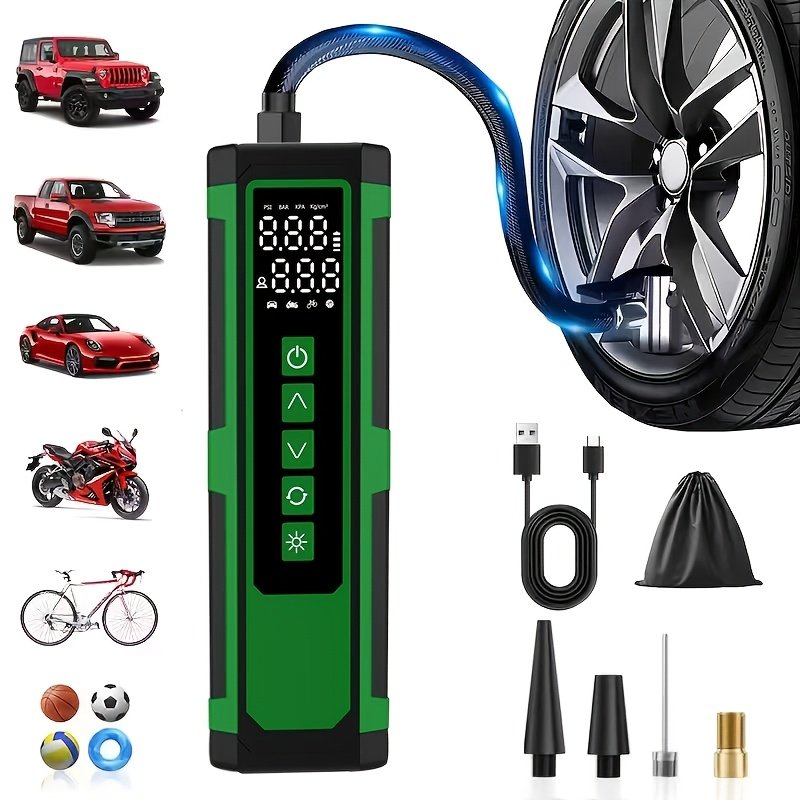
Portable Tire Inflator — Cordless Air Pump (150 PSI)
A rebuilt-title car has no warranty standing behind it — the small stuff is on you. This portable cordless tire inflator rides in the trunk and fills a tire in minutes, so a flat never becomes a tow bill on a car you just brought back to life.
$7.45 on Temu
See the inflator on TemuAffiliate link: if you buy, this site may earn a commission at no extra cost to you. Price checked September 2026; Temu prices change often.

Recommended · Temu
21V Cordless Drill Kit — Full Tool Set in a Case
Every repair you do yourself is a payment you don't finance. This 21V drill kit comes with the bits and hand tools to start — brakes, batteries, and the small stuff. 4.7 stars, 49K+ sold.
$12.67 on Temu
See the drill kit on TemuAffiliate link: if you buy, this site may earn a commission at no extra cost to you. Price checked September 2026; Temu prices change often.
Frequently asked questions
Can you get a loan on a car with a salvage title?
No. Auto Credit Express states it flatly: lenders won't finance a salvage title. The car can't legally be driven, registered, or insured until it's repaired and passes your state's inspection process, so it isn't usable collateral. Financing only enters the picture after the state issues a rebuilt title — and even then, the opening is narrow.
Can you finance a rebuilt title car with bad credit?
It's the hardest version of an already hard loan. As a rule, banks, credit unions, and even high-risk lenders will not finance branded titles, and CarsDirect confirms that includes subprime lenders. The realistic opening is a smaller bank, a credit union, a subprime lender, or an unsecured personal loan — expect legwork, or cash. Experian says a willing lender may charge a higher interest rate or require more money down, but no lender publishes figures for branded-title loans, so treat any specific number you see online as invented.
Can you get full coverage insurance on a rebuilt title car?
Maybe — it depends on the insurer. Progressive's own guidance: you can't get insurance at all on a car that still carries a salvage title; on a rebuilt title, liability and state-required coverages are typically available, but comprehensive and collision may or may not be offered, because old damage can't be separated from new damage. Line up the coverage before the loan — a lender will ask for proof of insurance with the coverage specifics.
How much cheaper is a rebuilt title car than the same car with a clean title?
Kelley Blue Book's rule of thumb: deduct 20% to 40% of the Blue Book Value for a salvaged, reconstructed, or otherwise clouded title — and CarsDirect puts rebuilt cars at 20% to 40% less expensive than their clean counterparts. A car still carrying a salvage title, unrepaired, can be worth up to 50% less (Experian), before repair costs. The discount is permanent: it follows the car to resale, and most franchise dealerships won't take a branded car in trade at all.
Can you refinance a rebuilt title car loan later?
Generally, no. CarsDirect's refinancing requirements include making sure the car has a clean title — a branded title, salvage or rebuilt, doesn't qualify. The buy-now-and-refinance-in-6-to-12-months path that works for clean-title bad-credit buyers is closed here, so judge any rebuilt-title loan as the loan you'll keep for its full term.